40,000 Why Is Pope Leo XIV's South American Tour Setting Up A Political Showdown?
Pope Leo XIV continues a 12-day South American tour following lung cancer surgery • Around 40,000 to 60,000 people attended events in Uruguay • Upcoming meetings in Argentina highlight social welfare disputes.
At a glance
- Pope Leo XIV delivered a homily outside the cathedral in Florida, Uruguay, on November 8, 2026.
- Around 40,000 people turned out in western Uruguay for Pope Leo XIV's first Mass.
- Pope Leo XIV underwent surgery for lung cancer on October 13, 2026.
- Pope Leo XIV held a prayer vigil in Montevideo's Centenary Stadium that drew about 60,000 young faithful.
- Next: Pope Leo XIV scheduled a visit to the Cottolengo Don Orione home for disabled people in Claypole, Argentina, as the first stop on his trip to Argentina.
Drafted with AI from named sources and checked automatically; published by our AI editor after passing every check. How briefs are made
- Al Jazeera
- DW
- The Guardian World
- BBC World
- France 24
The story
Before his recent lung cancer surgery and travels, Pope Leo XIV had not embarked on this South American tour, which began on November 8, 2026. Now, he has traveled to Uruguay, delivering a homily outside the cathedral in Florida and celebrating Mass for around 40,000 people in the western part of the country.
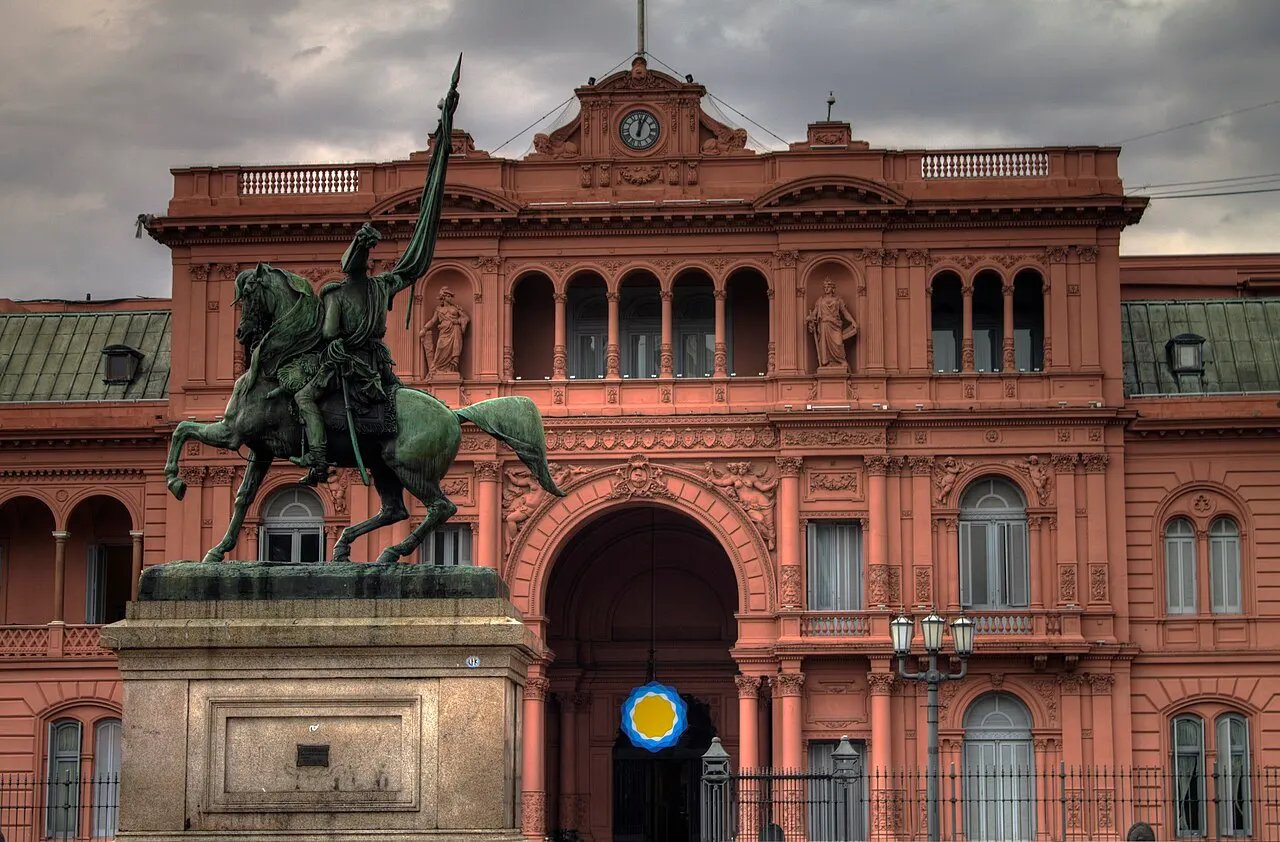
The tour now turns toward Argentina, drawing attention to groups dependent on state aid and social welfare disputes. Fernando Montero, coordinator at the Cottolengo Don Orione facility, stated that the government cut off the supply of medications, special foods, and diapers.
Sandra Pettovello, minister overseeing social policy for the government of Argentina, stated that there is no way the pope is going to come here to comment on local politics. Meanwhile, analysts Milagros Miceli and Juan Cruz Esquivel stated that the pope's rhetoric clashes with the ideology that Milei's government has been promoting, and Pope Leo XIV scheduled a visit to the Cottolengo Don Orione home for disabled people in Claypole, Argentina.
What each side says
Cottolengo Don Orione facility
“The government cut off the supply of medications, special foods and diapers. They haven't delivered any since last November. The matter is in court.”Fernando Montero
Government of Argentina
“There's no way the pope is going to come here to comment on local politics.”Sandra Pettovello
Who is involved
Pope Leo XIV
Head of the Catholic Church and sovereign of Vatican CityIn this storyHe continued a 12-day South American tour following his lung cancer surgery, holding events for crowds of 40,000 to 60,000 in Uruguay and scheduling upcoming meetings in Argentina2,3,4.
Sandra Pettovello
Minister of Human Capital of ArgentinaIn this storyShe is linked to upcoming meetings in Argentina that highlight social tensions over government policies3.
How we got here
- 2026-10-13Pope Leo XIV underwent surgery for lung cancer where doctors removed the lower lobe of his right lung.
- 2026-11-08Pope Leo XIV delivered a homily outside the cathedral in Florida, Uruguay, on the first day of his South American tour.
What the research says3 studies, 2010–2018
This literature review examines the historical context and scholarly research surrounding papal visits, religious structures, and social dynamics in Latin America. Prior to recent events, academic studies have focused on the institutional influence of the Catholic Church, religious diversification, and the intersection of religious worldviews with state laws. This review is organised into a historical overview of the papacy and church leadership, followed by thematic evaluations of religious sociology and the legal frameworks governing social policy in the region.
Historical Context of Papal Leadership
Historical documentation establishes the institutional structures of the Catholic Church and the selection processes for its leaders. According to Wikipedia's history of Pope Leo XIV1, the Pope serves as the head of the Catholic Church and sovereign of Vatican City. Preceding this era, historical records detail the 2013 conclave held on March 12 and March 13, 2013, to elect a successor to Benedict XVI, who had resigned on February 28, 2013 (Wikipedia's history of the 2013 conclave)6.
Out of 117 eligible cardinal electors, all but two attended that meeting, resulting in the election of Cardinal Jorge Mario Bergoglio on the fifth ballot, who subsequently took the name Francis (Wikipedia's history of the 2013 conclave)6. In addition to the papacy itself, the administrative framework includes the office of the papal legate, defined as a personal representative of the Pope to foreign nations, other parts of the Catholic Church, or state and monarchical representatives, who is empowered in matters of Catholic faith and ecclesiastical settlements (Wikipedia's history of the papal legate)7.
Furthermore, political leadership in Argentina has been shaped by Javier Gerardo Milei, an Argentine politician and economist who has served as president since 2023 and previously served as a member of the Chamber of Deputies from 2021 to 2023 (Wikipedia's history of Javier Milei)8.
Sociology of Religion in Latin America
Scholarly research into religious practices across Latin America has documented significant shifts in cultural and societal structures. De la Torre and Martín (2016)9 observed that social scientists have long considered religion to be a structuring feature of culture and local society, noting that early studies privileged the political influences of the Catholic Church regarding the state and society owing to the historical centrality of Catholicism in the region.
However, de la Torre and Martín (2016)9 pointed out that native folk religions received less attention, with scholars undervaluing indigenous and African religiosities, even as religions in Latin America currently experience diversification and reconfiguration due to the growing influence of different Christian denominations. Expanding on this religious landscape, Gooren (2010)10 examined the pentecostalization of religion and society, defined as the combination of Pentecostal growth, Pentecostal influence on other religions, and Pentecostal impact on the rest of society.
Gooren (2010)10 found that increased competition with other religions, such as the Catholic Charismatic Renewal and mainstream Protestantism, forces these traditions to adopt Pentecostal elements like conversion discourses, speaking in tongues, and faith healing, which gradually spread through mass media, political campaigns, and economic behavior.
Religion, Law, and Social Policy
The intersection of religious worldviews, legal systems, and public policy in the region has been a focal point for institutional analysis. Vaggione (2018)11 noted that contemporary sexual politics in Latin America present a challenge to rethink the relations between religion and law, particularly as debates on the regulations of sexuality, reproduction, and the family make visible the complex interconnections between religious worldviews and legal systems.
According to Vaggione (2018)11, the secularization of law has remained compatible with an imbrication process in which the legal system translates and conserves Catholic sexual morality into secular regulations. This dynamic involves various stakeholders in conflicts over sexual and reproductive rights mobilizing religion and the law to pursue their respective agendas (Vaggione, 2018)11.
This institutional framework relates directly to broader societal contexts, including recent reports documenting papal itineraries involving public housing and rehabilitation projects in neighborhoods beset by drug violence, as well as visits to facilities for disabled persons amid existing government policies and social tensions (Reports on Pope Leo XIV's South American tour)2,3.
The available literature and reports do not yet provide comprehensive data on the long-term socio-political outcomes of recent papal visits, nor do they fully measure the direct impact of papal commentary on contemporary government policies in Argentina and Uruguay. While sources document historical structures, religious diversification, and legal frameworks, empirical studies analyzing the direct correlation between papal events, crowd engagement ranging from 40,000 to 60,000 attendees, and legislative changes remain limited. Furthermore, discrepancies persist in how different sociological frameworks evaluate the balance between traditional Catholic influence and emerging Pentecostal demographics within local governance.
Sexuality, Law, and Religion in Latin America: Frameworks in Tension
Juan Marco Vaggione · Religion and GenderWhat to watch
- Pope Leo XIV scheduled a visit to the Cottolengo Don Orione home for disabled people in Claypole, Argentina, as the first stop on his trip to Argentina.
Update to an ongoing story. Follow this story over time: Why is Pope Leo visiting South America after lung cancer surgery? — living research page →
The data
Inflation in Argentina
Argentina: 41.9% in 2025 (-178 pts from 2024).
dashed = IMF forecastIMF World Economic OutlookDownload data (CSV, opens in Excel)
Show the numbers (28)
Country: Argentina · Indicator: inflation · Source: IMF World Economic Outlook
| Year | Value | Forecast |
|---|---|---|
| 2001 | -1.1 | no |
| 2002 | 25.9 | no |
| 2003 | 13.4 | no |
| 2004 | 4.4 | no |
| 2005 | 9.6 | no |
| 2006 | 10.9 | no |
| 2007 | 8.8 | no |
| 2008 | 8.6 | no |
| 2009 | 6.3 | no |
| 2010 | 10.5 | no |
| 2011 | 9.8 | no |
| 2012 | 10 | no |
| 2013 | 10.6 | no |
| 2017 | 25.7 | no |
| 2018 | 34.3 | no |
| 2019 | 53.5 | no |
| 2020 | 42 | no |
| 2021 | 48.4 | no |
| 2022 | 72.4 | no |
| 2023 | 133.5 | no |
| 2024 | 219.9 | no |
| 2025 | 41.9 | no |
| 2026 | 32.5 | yes |
| 2027 | 21.2 | yes |
| 2028 | 14.8 | yes |
| 2029 | 9.6 | yes |
| 2030 | 7.5 | yes |
| 2031 | 7.5 | yes |
Real GDP Growth Ranking Argentina
Argentina: 4.5%, 64 of 195 countries (median 3.5%).
IMF World Economic OutlookDownload data (CSV, opens in Excel)
Show the numbers (195)
Indicator: real GDP growth · Year: 2025 · Source: IMF World Economic Outlook
| Rank | Country | Value |
|---|---|---|
| 1 | South Sudan | 41.4 |
| 2 | Guyana | 19.3 |
| 3 | Libya | 15.9 |
| 4 | Kyrgyzstan | 11.1 |
| 5 | Rwanda | 9.4 |
| 6 | Ethiopia | 9.2 |
| 7 | Venezuela | 9 |
| 8 | Taiwan Province of China | 8.8 |
| 9 | Tajikistan | 8.4 |
| 10 | Zimbabwe | 8.3 |
| 11 | Bhutan | 8.2 |
| 12 | Benin | 8.1 |
| 13 | Ireland | 8 |
| 14 | Vietnam | 8 |
| 15 | India | 7.8 |
| 16 | Uzbekistan | 7.7 |
| 17 | Georgia | 7.5 |
| 18 | Armenia | 7.1 |
| 19 | Guinea | 6.9 |
| 20 | Niger | 6.9 |
| 21 | Mongolia | 6.8 |
| 22 | Senegal | 6.7 |
| 23 | Uganda | 6.7 |
| 24 | Paraguay | 6.6 |
| 25 | Côte d'Ivoire | 6.5 |
| 26 | Kazakhstan | 6.5 |
| 27 | Aruba | 6.3 |
| 28 | Cabo Verde | 6.3 |
| 29 | Maldives | 6.3 |
| 30 | Togo | 6.3 |
| 31 | Papua New Guinea | 6.2 |
| 32 | United Arab Emirates | 6.2 |
| 33 | Ghana | 6 |
| 34 | Palau | 6 |
| 35 | Tanzania | 5.9 |
| 36 | Central African Republic | 5.8 |
| 37 | Guinea-Bissau | 5.8 |
| 38 | Seychelles | 5.8 |
| 39 | Democratic Republic of the Congo | 5.7 |
| 40 | The Gambia | 5.7 |
| 41 | Burkina Faso | 5.3 |
| 42 | Cambodia | 5.3 |
| 43 | Malaysia | 5.2 |
| 44 | Tuvalu | 5.2 |
| 45 | Chad | 5.1 |
| 46 | Indonesia | 5.1 |
| 47 | Liberia | 5.1 |
| 48 | China | 5 |
| 49 | Singapore | 5 |
| 50 | Sri Lanka | 5 |
| 51 | Djibouti | 4.9 |
| 52 | Eswatini | 4.9 |
| 53 | Mali | 4.9 |
| 54 | Morocco | 4.9 |
| 55 | Nicaragua | 4.9 |
| 56 | Grenada | 4.8 |
| 57 | Laos | 4.8 |
| 58 | Sierra Leone | 4.8 |
| 59 | Macao SAR | 4.7 |
| 60 | Malta | 4.7 |
… 135 more rows in the CSV
IMF World Economic Outlook (IMF data, reused with citation)
How the world is covering it
75 reports from 13 countries in 1 languages in the last three days.
Coverage data: GDELT Project
Background
At a glance
 Argentina
- Capital
- Buenos Aires
- Population
- 47.5 million
- Leaders
- Javier Milei
- Currency
- Argentine convertible peso
Wikidata · IMF, 2026-11-09
Sources and method
References (17)
News reports
- More than 40,000 gather as Pope Leo XIV celebrates Mass in Uruguay DW
- Pope’s visit to Argentina sets up showdown with ‘hyper-capitalist’ Milei The Guardian World
- Pope in 'pretty good health' as he starts Latin America tour BBC World
Studies
- Renée de la Torre and Eloísa Martín (2016). Religious Studies in Latin America Annual Review of Sociology
- Henri Gooren (2010). The Pentecostalization of Religion and Society in Latin America Exchange
- Juan Marco Vaggione (2018). Sexuality, Law, and Religion in Latin America: Frameworks in Tension Religion and Gender
Background
- Pope Leo XIV Wikipedia
- Sandra Pettovello Wikipedia
- 2013 conclave Wikipedia
- Papal legate Wikipedia
- Javier Milei Wikipedia
Reports used for this brief
- Pope Leo XIV delivers homily to thousands in Uruguay Al Jazeera
- More than 40,000 gather as Pope Leo XIV celebrates Mass in Uruguay DW
- Pope’s visit to Argentina sets up showdown with ‘hyper-capitalist’ Milei The Guardian World
- Pope in 'pretty good health' as he starts Latin America tour BBC World
- Pope Leo in Latin America: Papal Politics and Peru France 24
Data
- IMF World Economic Outlook IMF data, reused with citation
How this brief was made
Automated research by ZynoNews: trending topic detected across news, searches and Wikipedia; facts and statements from the reports listed; numbers computed from open data; checked automatically for numbers, sources, copying and neutrality. Version 1. 5 news reports from 5 outlets, 3 official datasets, 3 research studies and 5 background sources.
Cite this
For papers, reports and theses. ZynoNews articles keep their address; updates are listed with their date.
ZynoNews Desk. (2026, November 13). Why Is Pope Leo XIV's South American Tour Setting Up A Political Showdown?. ZynoNews. https://zynonews.org/news/why-is-pope-leo-xiv-s-south-american-tour-setting-up-a-political-showdown-3dd7b4