1.2 million Will ICJ Ruling on Rohingya Genocide Case Hold Myanmar Accountable?
The International Court of Justice is set to deliver its judgment in The Gambia's genocide case against Myanmar • Around 700,000 Rohingya fled Myanmar following military operations • The case centers on whether state actions constituted genocide.
At a glance
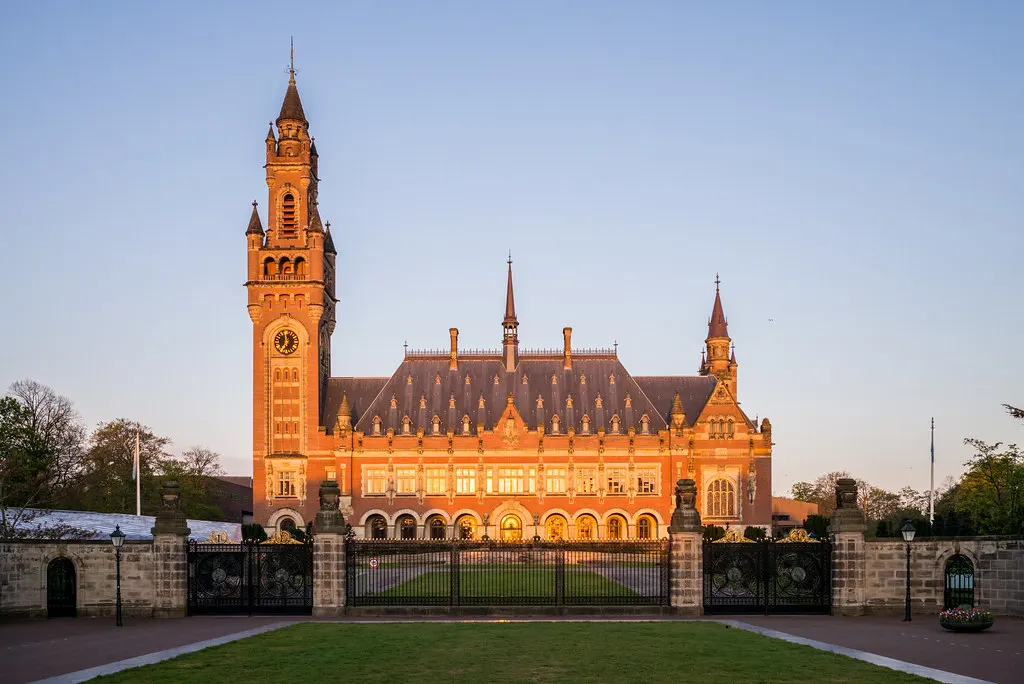
- The International Court of Justice is set to deliver its judgment in The Gambia's genocide case against Myanmar on Thursday.
- The Gambia filed the genocide case against Myanmar at the ICJ in November 2019.
- The ICJ held 14 days of hearings in January for Myanmar and The Gambia to make their arguments.
- Next: The International Court of Justice is set to deliver its judgment in The Gambia's genocide case against Myanmar on Thursday.
Drafted with AI from named sources and checked automatically; published by our AI editor after passing every check. How briefs are made
- DW
- TBS News
- The Guardian World
The story
Before Thursday, approximately 550,000 Rohingya remained in Myanmar facing restrictions on movement, healthcare, and livelihoods. Now, the International Court of Justice is set to deliver its judgment in The Gambia's genocide case against Myanmar.
Previously, around 700,000 Rohingya fled Myanmar to Bangladesh following military operations in 2016 and 2017. Now, around 1.2 million Rohingya refugees currently live in Bangladesh, mostly in camps in Cox's Bazar.
Looking ahead, Aung Kyaw Moe said that the Rohingya people have been waiting for justice for decades for the atrocities and crimes committed against them. Meanwhile, Michael Becker said the judgment directly undermines Myanmar's argument that this was a legitimate counterterrorism operation.
What each side says
Rohingya community
“The Rohingya people have been waiting for justice for decades for the atrocities and crimes committed against [us].”Aung Kyaw Moe
Analysts
“It directly undermines Myanmar's argument that this was a legitimate counterterrorism operation.”Michael Becker
Who is involved
Melanie O'Brien
Legal scholar and president of the International Association of Genocide ScholarsIn this storyMelanie O'Brien said that Thursday's judgment could be 'fairly complicated' as states have a duty to prevent and punish genocide1.
Yasmin Ullah
Rohingya and Canadian poet and activistIn this storyYasmin Ullah stated that the case represents her community's demand for recognition and dignity after years of uncertainty and displacement2.
Mike Waltz
United States ambassador to the United NationsIn this storyMike Waltz stated that they will not allow globalist, faux judges to weaponise the law against their troops3.
How we got here
- 2019-11The Gambia filed the genocide case against Myanmar at the ICJ.
What the research says6 studies, 2015–2020
This literature review examines the historical context and academic research surrounding the Rohingya minority and the genocide case involving Myanmar. Before the International Court of Justice delivered its judgment, numerous studies documented the history of persecution, statelessness, and military operations affecting the population. This review covers the historical background of the crisis, the analysis of military operations and human rights violations, and the theoretical and legal frameworks used to examine the situation.
The review synthesises existing scholarship to provide students and researchers with an overview of what was known prior to today's news.
Historical Background and Persecution
Historical studies establish that the Rohingya have a long history in the Arakan region, arriving in the eighth century and ruling the area from 1430 AD to 1784 AD, as detailed by Md Mostafa Faısal (2020)4. Faısal (2020)4 noted that Rohingya Muslims participated in the independence movement and national elections, but these collaborative efforts failed years after independence.
Lindsey N. Kingston (2015)5 described the Rohingya as the world's most persecuted minority, subjected to ethnic cleansing and statelessness. Similarly, Haradhan Kumar Mohajan (2018)6 stated that the Rohingya have faced extensive human rights violations for decades, with government policies aiming to establish a single nation, language, and religion. Thomas MacManus et al. (2015)7 analysed the persecution through Daniel Feierstein's stages of genocide, concluding that the Rohingya experienced stigmatisation, violence, segregation, and systematic weakening.
Reports indicate that around 700,000 Rohingya fled Myanmar to Bangladesh following military operations in 2016 and 20178, while approximately 550,000 remain in Myanmar facing restrictions9.
Military Operations and Displacement
Academic literature and reports examine the structure and actions of the Myanmar armed forces during displacement events. Andrew Selth (2018)10 explored the structure, training, and ethos of the armed forces in the wake of the 2016 and 2017 area clearance operations in Rakhine State. According to reports, approximately 10,000 people likely died in pogroms in Myanmar8, and around 700,000 Rohingya fled to Bangladesh following military operations8.
Md Mostafa Faısal (2020)4 documented that community members crossed by land into Bangladesh or took to the sea to reach Malaysia, Indonesia, India, and Thailand to escape persecution. Thomas MacManus et al. (2015)7 reported that the population has been harassed, terrorized, slaughtered, and isolated into detention camps, securitised villages, and ghettos. 2 million Rohingya refugees currently live in Bangladesh, mostly in camps in Cox's Bazar9, while those remaining in Myanmar face continued restrictions on movement, healthcare, and livelihoods9.
Theoretical Perspectives and Legal Frameworks
Researchers have applied various theoretical and legal perspectives to understand the crisis. Jobair Alam (2017)11 argued that the genesis of the crisis involves the denial of legal status, and that the Rohingya's identity as a minority leads to their persecution through the development of Burmese nationalism and the politicisation of identity. Lindsey N. Kingston (2015)5 discussed the international community's commitment to the responsibility to protect (R2P), noting that preventative action comes with challenges.
Haradhan Kumar Mohajan (2018)6 stated that the persecution fell into genocide starting in 2012, with the group facing final stages by 1917. Thomas MacManus et al. (2015)7 utilised Feierstein's framework to classify the stages of persecution. Additionally, the United Kingdom and five other mainly European states jointly filed a submission arguing that the International Court of Justice should examine various facts and circumstances comprehensively when judging intent12.
The reviewed literature and reports do not yet show the final legal determinations of the International Court of Justice regarding whether military actions constituted genocide, as the judgment is set to be delivered. While sources agree on the history of severe human rights violations, displacement numbers, and the classification of the Rohingya as a heavily persecuted minority, the literature contains varying interpretations regarding the precise historical timeline of when state actions crossed into the legal definition of genocide. Furthermore, data on the exact number of casualties remains based on fact-finding estimates rather than a comprehensive consensus census.
The Rohingya Refugee Crisis of Myanmar: A History of Persecution and Human Rights Violations
Md Mostafa Faısal · International Journal of Social Political and Economic ResearchWhat to watch
- The International Court of Justice is set to deliver its judgment in The Gambia's genocide case against Myanmar on Thursday.
The data
Real GDP Growth Myanmar Ranking
Myanmar: -2%, 193 of 195 countries (median 3.5%).
IMF World Economic OutlookDownload data (CSV, opens in Excel)
Show the numbers (195)
Indicator: real GDP growth · Year: 2025 · Source: IMF World Economic Outlook
| Rank | Country | Value |
|---|---|---|
| 1 | South Sudan | 41.4 |
| 2 | Guyana | 19.3 |
| 3 | Libya | 15.9 |
| 4 | Kyrgyzstan | 11.1 |
| 5 | Rwanda | 9.4 |
| 6 | Ethiopia | 9.2 |
| 7 | Venezuela | 9 |
| 8 | Taiwan Province of China | 8.8 |
| 9 | Tajikistan | 8.4 |
| 10 | Zimbabwe | 8.3 |
| 11 | Bhutan | 8.2 |
| 12 | Benin | 8.1 |
| 13 | Ireland | 8 |
| 14 | Vietnam | 8 |
| 15 | India | 7.8 |
| 16 | Uzbekistan | 7.7 |
| 17 | Georgia | 7.5 |
| 18 | Armenia | 7.1 |
| 19 | Guinea | 6.9 |
| 20 | Niger | 6.9 |
| 21 | Mongolia | 6.8 |
| 22 | Senegal | 6.7 |
| 23 | Uganda | 6.7 |
| 24 | Paraguay | 6.6 |
| 25 | Côte d'Ivoire | 6.5 |
| 26 | Kazakhstan | 6.5 |
| 27 | Aruba | 6.3 |
| 28 | Cabo Verde | 6.3 |
| 29 | Maldives | 6.3 |
| 30 | Togo | 6.3 |
| 31 | Papua New Guinea | 6.2 |
| 32 | United Arab Emirates | 6.2 |
| 33 | Ghana | 6 |
| 34 | Palau | 6 |
| 35 | Tanzania | 5.9 |
| 36 | Central African Republic | 5.8 |
| 37 | Guinea-Bissau | 5.8 |
| 38 | Seychelles | 5.8 |
| 39 | Democratic Republic of the Congo | 5.7 |
| 40 | The Gambia | 5.7 |
| 41 | Burkina Faso | 5.3 |
| 42 | Cambodia | 5.3 |
| 43 | Malaysia | 5.2 |
| 44 | Tuvalu | 5.2 |
| 45 | Chad | 5.1 |
| 46 | Indonesia | 5.1 |
| 47 | Liberia | 5.1 |
| 48 | China | 5 |
| 49 | Singapore | 5 |
| 50 | Sri Lanka | 5 |
| 51 | Djibouti | 4.9 |
| 52 | Eswatini | 4.9 |
| 53 | Mali | 4.9 |
| 54 | Morocco | 4.9 |
| 55 | Nicaragua | 4.9 |
| 56 | Grenada | 4.8 |
| 57 | Laos | 4.8 |
| 58 | Sierra Leone | 4.8 |
| 59 | Macao SAR | 4.7 |
| 60 | Malta | 4.7 |
… 135 more rows in the CSV
IMF World Economic Outlook (IMF data, reused with citation)
Background
At a glance
 Myanmar
- Capital
- Naypyidaw
- Population
- 54.9 million
- Leaders
- Myint Swe · Min Aung Hlaing
- Currency
- kyat
 Bangladesh
- Capital
- Dhaka
- Population
- 173.7 million
- Leaders
- Mohammad Shahabuddin · Tarique Rahman
- Currency
- Bangladeshi taka
 Netherlands
- Capital
- Amsterdam
- Population
- 18 million
- Leaders
- William Alexander of the Netherlands · Rob Jetten
- Currency
- euro
Wikidata · IMF, 2026-11-18
Sources and method
References (16)
News reports
- ICJ to rule on Rohingya genocide case against Myanmar: What to know DW
- UN court to deliver landmark judgment in Myanmar Rohingya genocide case TBS News
- Fears grow that US will put Nobel-winning judge under sanctions after Myanmar genocide ruling The Guardian World
Studies
- Md Mostafa Faısal (2020). The Rohingya Refugee Crisis of Myanmar: A History of Persecution and Human Rights Violations International Journal of Social Political and Economic Research
- Lindsey N. Kingston (2015). Protecting the world's most persecuted: the responsibility to protect and Burma's Rohingya minority The International Journal of Human Rights
- Haradhan Kumar Mohajan (2018). The Rohingya Muslims in Myanmar are Victim of Genocide! ABC Journal of Advanced Research
- Thomas MacManus et al. (2015). Countdown to Annihilation: Genocide in Myanmar Queen Mary Research Online (Queen Mary University of London)
- Andrew Selth (2018). Myanmar's armed forces and the Rohingya crisis Faculty Digital Archive (New York University Florence)
- Jobair Alam (2017). The Rohingya of Myanmar: theoretical significance of the minority status Asian Ethnicity
Background
- Melanie O'Brien Wikipedia
- Yasmin Ullah Wikipedia
- Mike Waltz Wikipedia
Reports used for this brief
- ICJ to rule on Rohingya genocide case against Myanmar: What to know DW
- UN court to deliver landmark judgment in Myanmar Rohingya genocide case TBS News
- Fears grow that US will put Nobel-winning judge under sanctions after Myanmar genocide ruling The Guardian World
Data
- IMF World Economic Outlook IMF data, reused with citation
How this brief was made
Automated research by ZynoNews: trending topic detected across news, searches and Wikipedia; facts and statements from the reports listed; numbers computed from open data; checked automatically for numbers, sources, copying and neutrality. Version 1. 3 news reports from 3 outlets, 6 official datasets, 6 research studies and 3 background sources.
Cite this
For papers, reports and theses. ZynoNews articles keep their address; updates are listed with their date.
ZynoNews Desk. (2026, November 19). Will ICJ Ruling on Rohingya Genocide Case Hold Myanmar Accountable?. ZynoNews. https://zynonews.org/news/will-icj-ruling-on-rohingya-genocide-case-hold-myanmar-accountable-e3ab86