2.5 million Why did 2.5 million people turn out for Pope Leo XIV in Argentina?
Pope Leo XIV drew 2.5 million people in Buenos Aires during his 12-day Latin American tour • Over 400 people with disabilities were visited at the Cottolengo Don Orione center • Pope Leo critiqued austerity and stated the economy must serve the people.
At a glance
- Pope Leo XIV celebrated an outdoor Mass in Buenos Aires, Argentina, drawing an estimated 2.5 million people.
- The Pope visited the Cottolengo Don Orione care center in Claypole, which houses more than 400 people with disabilities.
- Next: Pope Leo XIV is scheduled to travel to Peru on Wednesday.
Drafted with AI from named sources and checked automatically; published by our AI editor after passing every check. How briefs are made
- BBC World
- DW
- BBC Latin America
- The Guardian World
The story
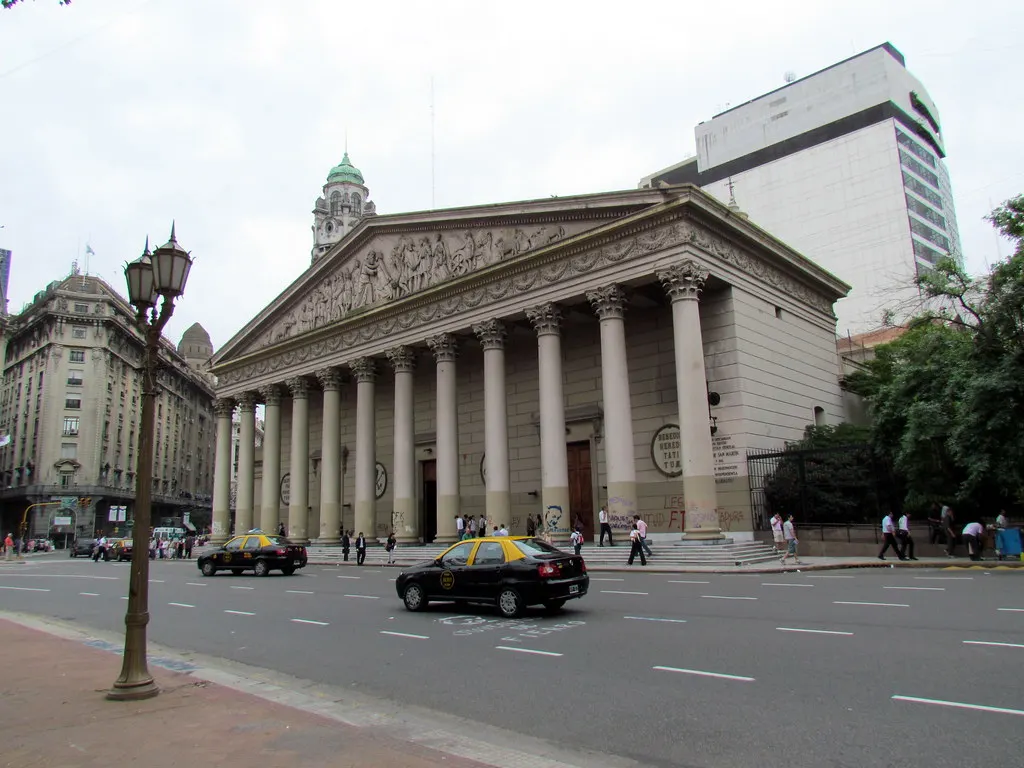
Before Pope Leo XIV arrived in Argentina, the country had not hosted a papal visit since 1987. Now, an estimated 2.5 million people have filled the streets of Buenos Aires to attend an open-air mass during the 12-day tour of Latin America.
The visit affects residents experiencing economic shifts under President Javier Milei, whose administration saw poverty rise to 32.3% in September. While 57.7% of people now identify as Catholic according to a University of Buenos Aires poll, down from about 90% in the 1960s, massive crowds turned out as Monday was declared a national holiday.
Pope Leo XIV stated that the economy must be at the service of the people rather than people at the service of the economy. Retired teacher Liliana Deblauwe noted that hopefully the pope will unite people just like the World Cup. The Pope is scheduled to travel to Peru on Wednesday.
What each side says
Vatican
“It fills my heart with joy to celebrate... with you”Pope Leo XIV
Residents
“Just like the World Cup unites us, hopefully the pope will too”Liliana Deblauwe
How we got here
- 2026-11Pope Leo XIV began a 12-day tour of South America visiting Uruguay, Argentina, and Peru.
What the research says6 studies, 2012–2019
This literature review provides an overview of the historical, economic, and social context surrounding Argentina's recent monetary developments and policy debates, serving as background for students and researchers. Before today's news regarding public gatherings and economic discourse, existing scholarship examined fiscal policies, monetary crises, and welfare states in Latin America. The review is organised chronologically through historical developments and topically across economic and social policy evaluations, drawing strictly from provided background materials, studies, and reports without taking new positions.
Historical Background and Monetary Crisis
Historical developments in Argentina establish the baseline context for modern economic and papal visits, noting that Argentina had not hosted a papal visit since 19871. According to Wikipedia's history of Pope Leo XIV, the Pope serves as the head of the Catholic Church and sovereign of Vatican City2. In domestic politics, Javier Gerardo Milei took office as the president of Argentina following the 2023 presidential elections, having previously served as a member of the Chamber of Deputies from 2021 to 20233.
Concurrently, the 2018-present Argentine monetary crisis emerged as an ongoing severe devaluation of the Argentine peso4. This crisis was caused by high inflation and a steep fall in the perceived value of the currency at the local level, leading the presidency of Mauricio Macri to request a loan from the International Monetary Fund4.
Economic Reforms and Fiscal Austerity
Scholarship on economic reforms examines the outcomes of fiscal adjustments, though researchers maintain varied perspectives. Following his election, President Javier Milei began extensive liberalising reforms, drastically reducing economic regulations, controls, subsidies, government employment, and spending5. Alesina et al. (2019)6 reviewed deficit reduction policies and argued that spending-based austerity plans are remarkably less costly than tax-based plans, often leading to a reduction of the debt-to-GDP ratio with close to zero effect on output.
A separate volume by Alesina et al. (2019)7 noted that while supporters argue budget deficits must be tackled aggressively at all times and costs, opponents counter that austerity can trigger downward growth spirals and become self-defeating. Similarly, Boyer (2012)8 argued that contemporary large-scale austerity measures often fail, identifying fallacies in diagnosing crises and predicting expansionary fiscal contractions.
Regarding international lending, Rickard and Caraway (2018)9 examined International Monetary Fund loans and found that conditions requiring public sector reforms significantly reduce government spending on public sector wage bills.
Welfare States and Social Policy
Research into Latin American welfare systems highlights the trajectory of social policies under varying political administrations. Niedzwiecki and Pribble (2017)10 analyzed social policy reforms enacted by right-leaning governments, specifically Sebastián Piñera in Chile and Mauricio Macri in Argentina, finding that neither administration engaged in deep spending cuts or privatization, contrasting with past neoliberal adjustments.
In a sectoral study, Zavras et al. (2016)11 assessed how economic crises and fiscal consolidation programs affected unmet healthcare needs in Greece using time series analysis. 3% in September12, while public confidence in the job market stayed generally poor despite increases in economic growth and public confidence in the economy5.
The reviewed literature does not yet establish a definitive consensus on the long-term social outcomes of recent liberalising reforms in Argentina, particularly regarding the intersection of macroeconomic debt reduction and household-level welfare over extended periods. While sources examine general mechanisms of spending-based versus tax-based austerity across advanced economies and past regional contexts, specific empirical data tracking the localized impacts of Argentina's post-2023 adjustments on vulnerable populations remain limited. Furthermore, sources disagree on whether fiscal contractions generate expansionary effects or depressive output spirals, and data regarding the exact causal links between international institutional loan conditions and specific public sector outcomes continue to show mixed empirical results.
Effects of Austerity: Expenditure- and Tax-based Approaches
Alberto Alesina et al. · The Journal of Economic PerspectivesWhat to watch
- Pope Leo XIV is scheduled to travel to Peru on Wednesday.
Update to an ongoing story. Follow this story over time: Why is Pope Leo visiting South America after lung cancer surgery? — living research page →
The data
Inflation Ranking for Argentina
Argentina: 41.9%, 6 of 195 countries (median 3%).
IMF World Economic OutlookDownload data (CSV, opens in Excel)
Show the numbers (195)
Indicator: inflation · Year: 2025 · Source: IMF World Economic Outlook
| Rank | Country | Value |
|---|---|---|
| 1 | Venezuela | 252 |
| 2 | Sudan | 99.9 |
| 3 | South Sudan | 97.6 |
| 4 | Zimbabwe | 81.4 |
| 5 | Iran | 50.6 |
| 6 | Argentina | 41.9 |
| 7 | Türkiye | 34.9 |
| 8 | Burundi | 34 |
| 9 | Malawi | 28.4 |
| 10 | Haiti | 28.3 |
| 11 | Nigeria | 23 |
| 12 | Myanmar | 21.1 |
| 13 | Egypt | 20.4 |
| 14 | Angola | 20.2 |
| 15 | Yemen | 20.2 |
| 16 | Bolivia | 19.5 |
| 17 | Ethiopia | 16 |
| 18 | Lebanon | 14.6 |
| 19 | Ghana | 14.2 |
| 20 | Zambia | 13.9 |
| 21 | Ukraine | 12.7 |
| 22 | Kazakhstan | 11.4 |
| 23 | West Bank and Gaza | 10.5 |
| 24 | Bangladesh | 10 |
| 25 | Suriname | 9.2 |
| 26 | Uzbekistan | 8.8 |
| 27 | Russia | 8.7 |
| 28 | Mongolia | 8.6 |
| 29 | Liberia | 8.3 |
| 30 | Kyrgyzstan | 8.2 |
| 31 | Madagascar | 8 |
| 32 | The Gambia | 7.9 |
| 33 | Moldova | 7.8 |
| 34 | Laos | 7.7 |
| 35 | Sierra Leone | 7.6 |
| 36 | Democratic Republic of the Congo | 7.4 |
| 37 | Romania | 7.3 |
| 38 | Rwanda | 7 |
| 39 | Belarus | 6.6 |
| 40 | Naoero | 6.1 |
| 41 | Kiribati | 5.9 |
| 42 | Azerbaijan | 5.6 |
| 43 | Tunisia | 5.3 |
| 44 | Colombia | 5.1 |
| 45 | Brazil | 5 |
| 46 | Estonia | 4.8 |
| 47 | Uruguay | 4.7 |
| 48 | Honduras | 4.6 |
| 49 | Pakistan | 4.5 |
| 50 | Croatia | 4.4 |
| 51 | Hungary | 4.4 |
| 52 | Mozambique | 4.4 |
| 53 | Papua New Guinea | 4.4 |
| 54 | Chile | 4.2 |
| 55 | Slovakia | 4.2 |
| 56 | Iceland | 4.1 |
| 57 | Kenya | 4.1 |
| 58 | Marshall Islands | 4.1 |
| 59 | Nepal | 4.1 |
| 60 | North Macedonia | 4.1 |
… 135 more rows in the CSV
Government Debt for Argentina
Argentina: 80.1%, 44 of 192 countries (median 52.8%).
IMF World Economic OutlookDownload data (CSV, opens in Excel)
Show the numbers (192)
Indicator: government debt (% of GDP) · Year: 2025 · Source: IMF World Economic Outlook
| Rank | Country | Value |
|---|---|---|
| 1 | Japan | 204.8 |
| 2 | Sudan | 204.4 |
| 3 | Singapore | 165.7 |
| 4 | Libya | 153.8 |
| 5 | Greece | 146.6 |
| 6 | Bahrain | 144.3 |
| 7 | Lebanon | 139.4 |
| 8 | Italy | 137.1 |
| 9 | Maldives | 129.4 |
| 10 | Senegal | 127.7 |
| 11 | United States | 124.4 |
| 12 | France | 115.5 |
| 13 | Cabo Verde | 115.4 |
| 14 | Canada | 113.6 |
| 15 | Belgium | 107.9 |
| 16 | Saint Vincent and the Grenadines | 107.7 |
| 17 | Ukraine | 107.1 |
| 18 | Bhutan | 102.6 |
| 19 | United Kingdom | 102.1 |
| 20 | Zambia | 100.6 |
| 21 | Spain | 100.5 |
| 22 | Republic of the Congo | 100.4 |
| 23 | Dominica | 99.9 |
| 24 | China | 98.6 |
| 25 | Suriname | 96.9 |
| 26 | Sri Lanka | 96.8 |
| 27 | Malawi | 96.6 |
| 28 | Barbados | 96.2 |
| 29 | Brazil | 93.3 |
| 30 | Mozambique | 90.3 |
| 31 | Portugal | 89.7 |
| 32 | Laos | 88.8 |
| 33 | Finland | 88.4 |
| 34 | El Salvador | 87.6 |
| 35 | Egypt | 86.8 |
| 36 | Mauritius | 86.8 |
| 37 | India | 84.3 |
| 38 | Gabon | 84.2 |
| 39 | Trinidad and Tobago | 84 |
| 40 | Jordan | 83.6 |
| 41 | Bolivia | 83.3 |
| 42 | Tunisia | 81.7 |
| 43 | Austria | 81.4 |
| 44 | Argentina | 80.1 |
| 45 | South Africa | 78.4 |
| 46 | Fiji | 77.1 |
| 47 | Saint Lucia | 76.8 |
| 48 | Guinea-Bissau | 75.1 |
| 49 | Hungary | 74.6 |
| 50 | The Gambia | 73.7 |
| 51 | Pakistan | 72.8 |
| 52 | The Bahamas | 71.7 |
| 53 | Kenya | 71.3 |
| 54 | Malaysia | 70.5 |
| 55 | Antigua and Barbuda | 70.2 |
| 56 | Grenada | 69.4 |
| 57 | Israel | 67.9 |
| 58 | Namibia | 67.5 |
| 59 | Belize | 66.9 |
| 60 | Morocco | 66.6 |
… 132 more rows in the CSV
IMF World Economic Outlook (IMF data, reused with citation)
Background
At a glance
 Argentina
- Capital
- Buenos Aires
- Population
- 47.5 million
- Leaders
- Javier Milei
- Currency
- Argentine convertible peso
Wikidata · IMF, 2026-11-10
Sources and method
References (17)
News reports
- Pope Leo draws 2.5 million in Buenos Aires, renews warning over Milei's austerity DW
- Pope Leo delivers stinging rebuke of Milei’s austerity measures during Argentina visit The Guardian World
Studies
- Alberto Alesina et al. (2019). Effects of Austerity: Expenditure- and Tax-based Approaches The Journal of Economic Perspectives
- Alberto Alesina et al. (2019). Austerity: When It Works and When It Doesn't
- Robert Boyer (2012). The four fallacies of contemporary austerity policies: the lost Keynesian legacy Cambridge Journal of Economics
- Stephanie J. Rickard and Teri L. Caraway (2018). International demands for austerity: Examining the impact of the IMF on the public sector The Review of International Organizations
- Sara Niedzwiecki and Jennifer Pribble (2017). Social Policies and Center-Right Governments in Argentina and Chile Latin American Politics and Society
- Dimitris Zavras et al. (2016). Economic crisis, austerity and unmet healthcare needs: the case of Greece BMC Health Services Research
Background
- Pope Leo XIV Wikipedia
- Javier Milei Wikipedia
- 2018–present Argentine monetary crisis Wikipedia
- Economic reforms of Javier Milei Wikipedia
Reports used for this brief
- Millions fill Buenos Aires streets to welcome Pope Leo XIV BBC World
- Pope Leo draws 2.5 million in Buenos Aires, renews warning over Milei's austerity DW
- Millions fill Buenos Aires streets to welcome Pope Leo XIV BBC Latin America
- Pope Leo delivers stinging rebuke of Milei’s austerity measures during Argentina visit The Guardian World
Data
- IMF World Economic Outlook IMF data, reused with citation
How this brief was made
Automated research by ZynoNews: trending topic detected across news, searches and Wikipedia; facts and statements from the reports listed; numbers computed from open data; checked automatically for numbers, sources, copying and neutrality. Version 1. 4 news reports from 4 outlets, 3 official datasets, 6 research studies and 4 background sources.
Cite this
For papers, reports and theses. ZynoNews articles keep their address; updates are listed with their date.
ZynoNews Desk. (2026, November 11). Why did 2.5 million people turn out for Pope Leo XIV in Argentina?. ZynoNews. https://zynonews.org/news/why-did-2-5-million-people-turn-out-for-pope-leo-xiv-in-argentina-50ede3