At least 17 people died What Caused the Deadly Steel Factory Blast in Turkey That Killed 17?
An explosion at a steel plant near Izmir killed at least 17 workers and injured 12 to 13 others • The blast happened during maintenance when a crane collapsed into a furnace • Officials opened an investigation while critics debate workplace safety standards.
At a glance
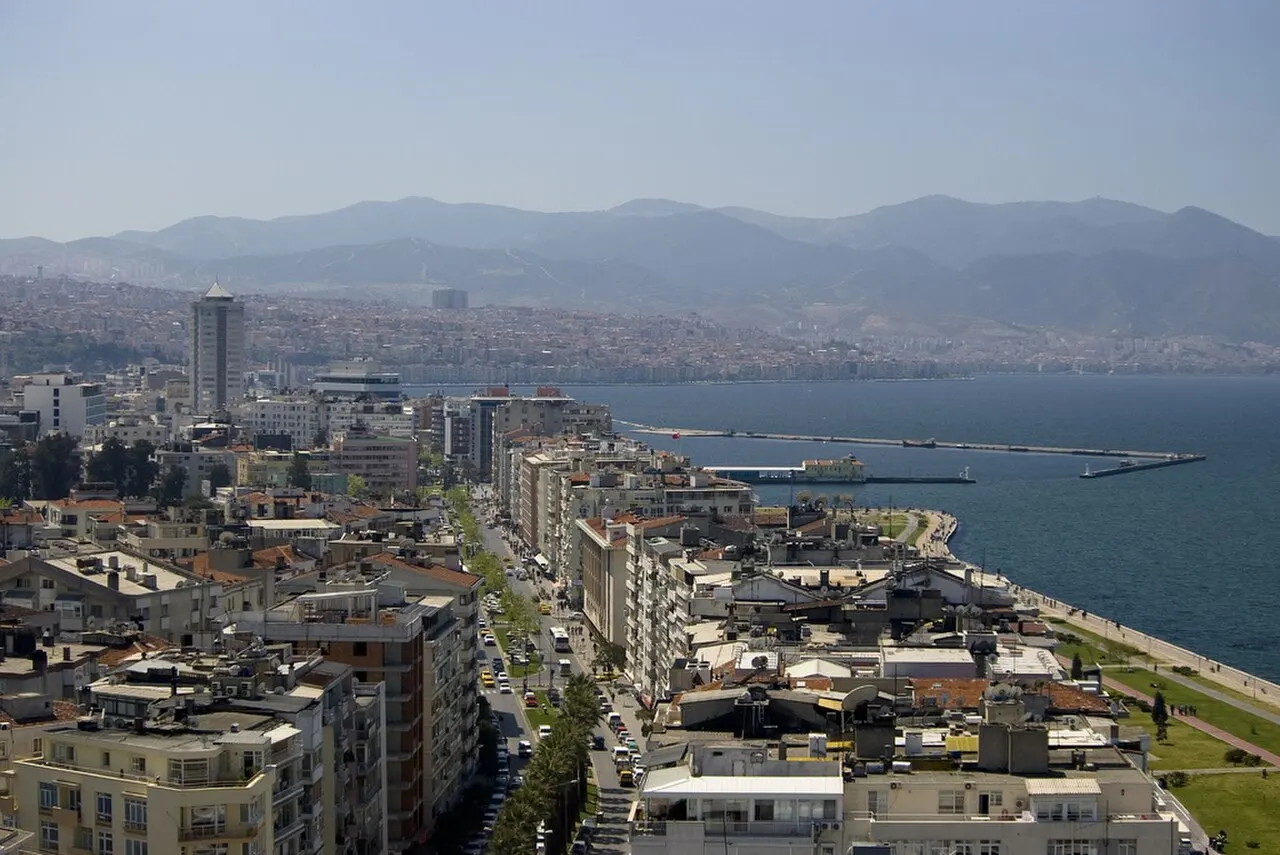
- An explosion at an iron and steel factory near Izmir in western Turkey killed at least 17 people and injured 12 to 13 others.
- The local governor stated the blast happened around midday when a crane carrying a replacement boiler collapsed into a furnace.
- At least five people have been arrested in connection with the incident.
- Next: Investigations and search and rescue operations are under way.
Drafted with AI from named sources and checked automatically; published by our AI editor after passing every check. How briefs are made
- BBC World
- DW
- Al Jazeera
- timesofindia.indiatimes.com
- klix.ba
- aktuale.mk
The story
At least 17 people died and 12 to 13 others were injured in an explosion at an iron and steel factory near Izmir in western Turkey. The local governor stated the blast happened around midday when a crane carrying a replacement boiler collapsed into a furnace. All victims killed and injured were workers at the Habas Demir Celik plant in Aliaga.
The accident occurred during scheduled maintenance work on one of the plant's electric arc furnaces. President of Turkey Recep Tayyip Erdoğan stated that investigations are under way, while search and rescue operations continued. Health Minister Kemal Memişoğlu noted that one of those who had been critically injured had later died, taking the toll to 17.
On the labor and opposition side, TIP Leader Erkan Bas stated that the regime of bosses has declared war on the workers, while Union Leader Basaran Aksu stated the massacre calls for the resignation of the minister of labor. Meanwhile, Minister of Justice Akın Gürlek stated that four public prosecutors had been assigned to the case, and at least five people have been arrested in connection with the incident.
What each side says
Government of Turkey
President Recep Tayyip Erdoğan stated that investigations are under way, while Justice Minister Akın Gürlek assigned four public prosecutors to the case.
Company
Habas Demir Celik Company stated that the accident occurred during scheduled maintenance work on one of the plant's electric arc furnaces.
Who is involved
Recep Tayyip Erdoğan
President of TurkeyIn this storyRecep Tayyip Erdoğan stated that investigations were under way while search and rescue operations continued.
Kemal Memişoğlu
Minister of Health of the Republic of TurkeyIn this storyKemal Memişoğlu stated that one of those who had been critically injured had later died, taking the toll to 17.
Cemil Tugay
Mayor of IzmirIn this storyCemil Tugay stated that the initial fire following the blast had been extinguished, but the exact number of dead and injured would become clear only after the debris had been cleared.
What the research says6 studies, 2014–2024
This literature review examines the context surrounding industrial disasters, occupational safety and health management, and workplace accident factors in Turkey to provide a foundation for understanding recent events at the steel facility near Izmir. By synthesizing historical industrial accident records, occupational safety frameworks, and empirical studies on steel manufacturing and national safety standards, this overview outlines existing knowledge prior to the reported blast.
The review is organized into a historical overview of industrial accidents, followed by thematic discussions on safety culture and risk assessment, and finally an examination of occupational safety practices and accident factors in Turkey.
Historical Context of Industrial Incidents
Historical records indicate that industrial disasters are forms of industrial accidents caused by accident, negligence, or incompetence, resulting in great damage, injury, or loss of life, as outlined in Wikipedia's overview of industrial disasters4. 5 million tons of steel5. Alongside broader industrial tracking, researchers have monitored working conditions and accident statistics in various operational environments.
For example, Fatih Yılmaz (2015)6 analyzed accident causes and results at a construction site in Istanbul using retrospective cohort methodology, noting that site inadequacies led to numerous worker fatalities and permanent disabilities, while also generating serious financial losses for companies and national economies.
Safety Culture and Risk Management
Research into occupational safety and health (OSH) examines the safety, health, and welfare of people at work, aligning with occupational medicine, hygiene, and public protection7. To understand worker perspectives and risk-taking, Hasse Nordlöf et al. (2014)8 conducted focus group interviews at a large steel-manufacturing company in Sweden, concluding that organizational safety culture influences how safety procedures and regulations are followed.
Similarly, Volodymyr Valentynovych Kukhar et al. (2018)9 assessed working conditions and safety management systems at an iron and steel works in Mariupol, Ukraine, utilizing European standards to determine workplace hazards and technological risks. Advancing methodological approaches, Anna Skład (2019)10 applied fuzzy cognitive maps to examine the impact of individual processes on Occupational Safety and Health Management Systems (OSH MS), demonstrating through simulations how process improvements affect overall safety performance.
Furthermore, Oleg Bazaluk et al. (2024)11 sought to improve occupational risk management systems using the BOW-TIE method in accordance with ISO 45001:2019 standards to identify hazardous factors and analyze potential risk development.
Occupational Safety Factors in Turkey
Focusing on national conditions, Fatih Yılmaz and Selçuk Alp (2016)12 noted that an average of 80 thousand occupational accidents occur each year in Turkey, resulting in 1,500 worker fatalities. While legal arrangements incorporating a policy of preventive approach have been established, the authors found that implementation levels were inadequate, specifically regarding employee training, employee participation, labor inspections, and periodic checks in maintenance and audit areas12.
Complementing these findings, recent monitoring data from the Health and Safety Labor Watch documented 226 workplace deaths across Turkey during the month of September5. These studies collectively illustrate the regulatory, operational, and monitoring challenges associated with maintaining workplace safety in industrial and construction sectors within the country.
The current literature does not provide empirical data connecting the specific maintenance procedures and crane operations at the Habas Demir Celik plant in Aliaga directly to the broader systemic occupational safety implementation failures documented in national studies. Furthermore, existing research lacks detailed post-incident analyses of furnace-related collapses during shift changes, leaving a gap between general steel-manufacturing risk assessments and the specific causal mechanisms of the Izmir factory blast.
Improvement of the occupational risk management process in the work safety system of the enterprise
Oleg Bazaluk et al. · Frontiers in Public HealthWhat to watch
- Investigations and search and rescue operations are under way.
- The debris needs to be cleared to determine the exact number of dead and injured.
The data
Unemployment rate, Türkiye
Türkiye: 8.3% in 2025 (-0.4 pts from 2024).
dashed = IMF forecastIMF World Economic OutlookDownload data (CSV, opens in Excel)
Show the numbers (31)
Country: Türkiye · Indicator: unemployment rate · Source: IMF World Economic Outlook
| Year | Value | Forecast |
|---|---|---|
| 2001 | 7.8 | no |
| 2002 | 9.8 | no |
| 2003 | 9.9 | no |
| 2004 | 9.7 | no |
| 2005 | 9.2 | no |
| 2006 | 8.7 | no |
| 2007 | 8.9 | no |
| 2008 | 9.8 | no |
| 2009 | 12.9 | no |
| 2010 | 11 | no |
| 2011 | 9 | no |
| 2012 | 8.3 | no |
| 2013 | 8.9 | no |
| 2014 | 9.9 | no |
| 2015 | 10.3 | no |
| 2016 | 10.9 | no |
| 2017 | 10.9 | no |
| 2018 | 10.9 | no |
| 2019 | 13.7 | no |
| 2020 | 13.1 | no |
| 2021 | 12 | no |
| 2022 | 10.4 | no |
| 2023 | 9.4 | no |
| 2024 | 8.7 | no |
| 2025 | 8.3 | no |
| 2026 | 8.2 | yes |
| 2027 | 8.3 | yes |
| 2028 | 8.3 | yes |
| 2029 | 8.2 | yes |
| 2030 | 8.2 | yes |
| 2031 | 8.2 | yes |
IMF World Economic Outlook (IMF data, reused with citation)
How the world is covering it
17 reports from 7 countries in 8 languages in the last three days.
Coverage data: GDELT Project
Background
At a glance
 Türkiye
- Capital
- Ankara
- Population
- 85.8 million
- Leaders
- Recep Tayyip Erdoğan
- Currency
- Turkish lira
Wikidata · IMF, 2026-11-10
Sources and method
References (19)
News reports
Studies
- Fatih Yılmaz (2015). Monitoring and Analysis of Construction Site Accidents by Using Accidents Analysis Management System in Turkey Journal of Sustainable Development
- Hasse Nordlöf et al. (2014). Safety culture and reasons for risk-taking at a large steel-manufacturing company: Investigating the worker perspective Safety Science
- Volodymyr Valentynovych Kukhar et al. (2018). Estimation of occupational safety risks at energetic sector of Iron and Steel Works International Journal of Engineering & Technology
- Anna Skład (2019). Assessing the impact of processes on the Occupational Safety and Health Management System’s effectiveness using the fuzzy cognitive maps approach Safety Science
- Oleg Bazaluk et al. (2024). Improvement of the occupational risk management process in the work safety system of the enterprise Frontiers in Public Health
- Fatih Yılmaz and Selçuk Alp (2016). Underlying Factors of Occupational Accidents: The Case of Turkey Open Journal of Safety Science and Technology
Background
- Recep Tayyip Erdoğan Wikipedia
- Kemal Memişoğlu Wikipedia
- Cemil Tugay Wikipedia
- List of industrial disasters Wikipedia
- Occupational safety and health Wikipedia
Reports used for this brief
- Turkey steel factory blast kills at least 17 people BBC World
- Turkey: Workers killed in Izmir steel plant blast DW
- Deadly explosion at Iron and steel plant in Turkiye Al Jazeera
- Deadly explosion at Turkey steel factory kills 17 workers , injures 12 others timesofindia.indiatimes.com
- Erdogan saopćio nove detalje : U eksploziji kod Izmira poginulo 16 osoba , a 13 je povrijeđeno klix.ba
- Tragjike , 16 Persona Të Vdekur Dhe 13 Të Lënduar Në Një Shpërthim Në Një Fabrikë çeliku Në Izmir Të Turqisë aktuale.mk
Data
- IMF World Economic Outlook IMF data, reused with citation
How this brief was made
Automated research by ZynoNews: trending topic detected across news, searches and Wikipedia; facts and statements from the reports listed; numbers computed from open data; checked automatically for numbers, sources, copying and neutrality. Version 1. 6 news reports from 6 outlets, 3 official datasets, 6 research studies and 5 background sources.
Cite this
For papers, reports and theses. ZynoNews articles keep their address; updates are listed with their date.
ZynoNews Desk. (2026, November 14). What Caused the Deadly Steel Factory Blast in Turkey That Killed 17?. ZynoNews. https://zynonews.org/news/what-caused-the-deadly-steel-factory-blast-in-turkey-that-killed-17-ff980e