10,000 How Is Somalia's Tourism Growing Amid Shifting Security In Mogadishu?
About 10,000 tourists visited Somalia in 2024 as locals and visitors share new perspectives on the country.
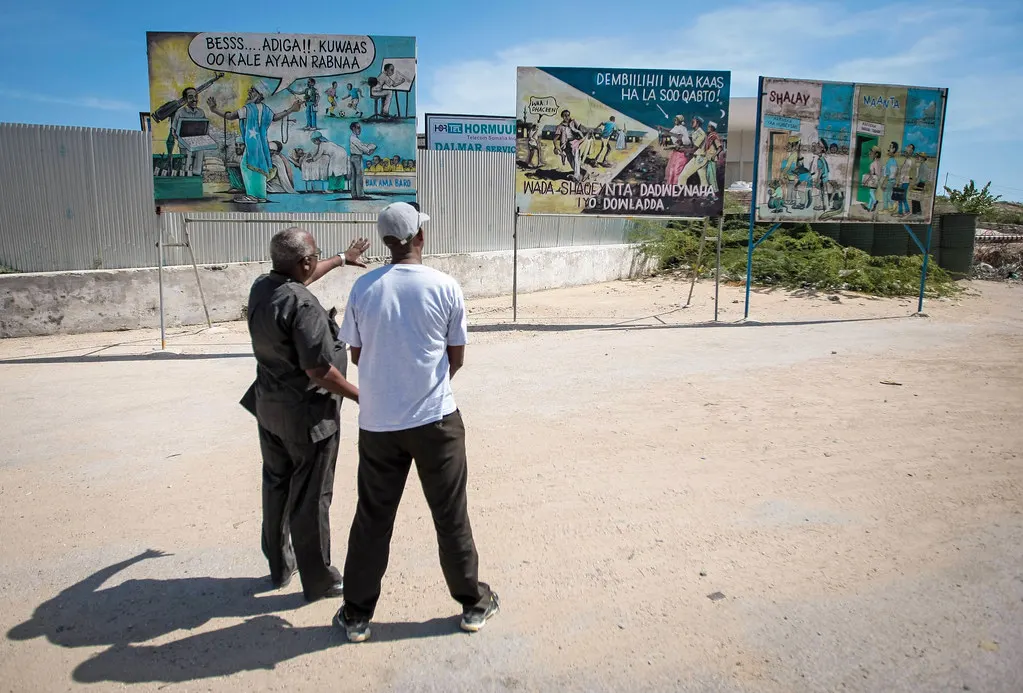
At a glance
- About 10,000 tourists visited Somalia in 2024, marking a 50 percent increase from the previous year according to the tourism department.
- Al-Shabab withdrew from most of Mogadishu in 2011, and the federal government was established in 2012.
- Somalia has mainland Africa's longest coastline, stretching over 3,000km along the Indian Ocean and Gulf of Aden.
- Next: Further reports from the tourism department on visitor numbers
Drafted with AI from named sources and checked automatically; published by our AI editor after passing every check. How briefs are made
- BBC World
- BBC Africa
The story
About 10,000 tourists visited Somalia in 2024, marking a 50 percent increase from the previous year according to the tourism department. Somalia has mainland Africa's longest coastline, stretching over 3,000km along the Indian Ocean and Gulf of Aden.
Al-Shabab withdrew from most of Mogadishu in 2011, and the federal government was established in 2012. These events shaped the environment where tour guide Sucdi Abdul Fattah Abdul Khader works, noting that visitors are surprised by how beautiful and welcoming the country is.
Tour guide Sucdi Abdul Fattah Abdul Khader said, "I would want them to see the beautiful, welcoming side of Mogadishu, and not the side that they heard from the media, which is explosions and bombs." Travel content creator Chris Reese said, "I had such a positive experience - I really enjoyed seeing the country for the first time - that I opted to bring back a group of my friends." Future updates will cover further tourism and security developments.
What each side says
Residents
“I would want them to see the beautiful, welcoming side of Mogadishu, and not the side that they heard from the media, which is explosions and bombs”Sucdi Abdul Fattah Abdul Khader
Tourists
“I had such a positive experience - I really enjoyed seeing the country for the first time - that I opted to bring back a group of my friends”Chris Reese
How we got here
- 2011Al-Shabab withdrew from most of Mogadishu
- 2012The federal government was established
- 2024About 10,000 tourists visited Somalia
What the research says5 studies, 2008–2017
This literature review examines the historical background, military operations, and shifting dynamics surrounding security and tourism in Somalia. By synthesizing findings from historical overviews, peacekeeping literature, and recent reports, this review provides students and researchers with an academic foundation regarding international interventions and local developments in the region. The review is organized chronologically through the origins of the ongoing civil conflicts, followed by thematic examinations of multinational peacekeeping missions and the interplay between security operations and external state interests.
Historical Background of Conflict
According to the Wikipedia history of the Somali Civil War1, the ongoing conflict grew out of resistance to the military junta led by Siad Barre during the 1980s. Since the mid-2000s, the United States has provided military support to the Ethiopian National Defence Force, African Union troops, the Somali Transitional Federal Government, and its successor, the Federal Government of Somalia, in conflicts against Somali Islamist non-state actors2.
Al-Shabab later withdrew from most of Mogadishu in 2011, and the federal government was established in 20123. Building on these developments, reports note that about 10,000 tourists visited Somalia in 2024, marking a 50% increase from the previous year according to the tourism department3. Additionally, local tour guides such as Sucdi Abdul Fattah Abdul Khader have operated in Mogadishu, building upon family ties to the business spanning decades3.
Multinational Peacekeeping Operations
The African Union Mission in Somalia was a multinational force formed by the African Union, deployed soon after the Islamic Courts Union was deposed by Ethiopian troops in late 20064. Paul Williams (2017)5 notes that AMISOM became the Union's longest running, largest, most costly, and most deadly operation, with only six out of 54 AU members contributing troops: Uganda, Burundi, Djibouti, Kenya, Sierra Leone, and Ethiopia.
Tim Murithi (2008)6 assessed the evolving role of the AU in peace operations, arguing that the AU made significant efforts despite the youthfulness of its institutions. Peter Albrecht and Cathy Haenlein (2016)7 examined how AMISOM grew into the regional organization's largest peace-support operation, achieving important gains against Al-Shabaab through a multilayered mission architecture supported by the UN and bilateral donors.
Furthermore, the African Union Transition Mission in Somalia served as a transition and drawdown mission, operating until 2022 with the goal of fully transferring security operations to the Somali National Armed Forces using troops from East African nations including Uganda, Kenya, Burundi, Djibouti, and Ethiopia8.
External State Interests and Proxy Security
External involvement in Somalia has frequently operated through strategic partnerships and proxy frameworks. Gorm Rye Olsen (2014)9 argued that when Western powers decide to provide security in Africa, they are inclined to use proxies rather than deploying their own troops, meaning African forces perform the actual fighting and peacekeeping while Western powers cover costs.
This dynamic aligns with historical United States military support provided to regional forces and transitional governments in their conflicts against Islamist non-state actors2. Furthermore, research by Eli Berman et al. (2011)10 on the economics of counterinsurgency developed a three-way contest model between violent rebels, a government seeking to minimize violence through service provision and coercion, and civilians deciding whether to share information, showing that improved service provision reduces insurgent violence.
The reviewed literature does not yet provide comprehensive data regarding the direct socioeconomic impacts of the recent military drawdowns by the African Union Transition Mission in Somalia on local tourism economies in Mogadishu. While sources document historical troop contributions and broad strategic frameworks, there is a lack of detailed empirical studies examining how shifting conflict dynamics directly influence tourist inflows or local guide operations. Furthermore, sources offer limited comparative analysis on the specific operational outcomes of individual troop-contributing nations like Uganda following their exit from the mission.
Joining AMISOM: why six African states contributed troops to the African Union Mission in Somalia
Paul Williams · Journal of Eastern African StudiesWhat to watch
- Further reports from the tourism department on visitor numbers
The data
Somalia Real GDP Growth
Somalia: 3.1% in 2025 (-0.9 pts from 2024).
dashed = IMF forecastIMF World Economic OutlookDownload data (CSV, opens in Excel)
Show the numbers (20)
Country: Somalia · Indicator: real GDP growth · Source: IMF World Economic Outlook
| Year | Value | Forecast |
|---|---|---|
| 2012 | 1.2 | no |
| 2013 | 5.7 | no |
| 2014 | 2.7 | no |
| 2015 | 4.6 | no |
| 2016 | -1.3 | no |
| 2017 | 9.5 | no |
| 2018 | 1.4 | no |
| 2019 | 3.6 | no |
| 2020 | -2.7 | no |
| 2021 | 3.5 | no |
| 2022 | 2.8 | no |
| 2023 | 4.2 | no |
| 2024 | 4 | no |
| 2025 | 3.1 | no |
| 2026 | 2.3 | yes |
| 2027 | 2.7 | yes |
| 2028 | 3.2 | yes |
| 2029 | 3.6 | yes |
| 2030 | 3.8 | yes |
| 2031 | 4 | yes |
Somalia Inflation
Somalia: 3.7% in 2025 (-1.8 pts from 2024).
dashed = IMF forecastIMF World Economic OutlookDownload data (CSV, opens in Excel)
Show the numbers (19)
Country: Somalia · Indicator: inflation · Source: IMF World Economic Outlook
| Year | Value | Forecast |
|---|---|---|
| 2013 | 2.8 | no |
| 2014 | 1.3 | no |
| 2015 | 0.9 | no |
| 2016 | 0 | no |
| 2017 | 4 | no |
| 2018 | 4.3 | no |
| 2019 | 4.7 | no |
| 2020 | 4.1 | no |
| 2021 | 4.6 | no |
| 2022 | 6.8 | no |
| 2023 | 6.2 | no |
| 2024 | 5.5 | no |
| 2025 | 3.7 | no |
| 2026 | 6.3 | yes |
| 2027 | 5.5 | yes |
| 2028 | 5 | yes |
| 2029 | 4.5 | yes |
| 2030 | 4 | yes |
| 2031 | 4 | yes |
IMF World Economic Outlook (IMF data, reused with citation)
Background
At a glance
 Uganda
- Capital
- Kampala
- Population
- 48 million
- Leaders
- Yoweri Museveni · Nabbanja Robinah
- Currency
- Ugandan shilling
 Somalia
- Capital
- Mogadishu
- Population
- 17 million
- Leaders
- Hassan Sheikh Mohamud · Hamza Abdi Barre
- Currency
- Somali shilling
 Kenya
- Capital
- Nairobi
- Population
- 53.4 million
- Leaders
- William Ruto
- Currency
- Kenyan shilling
Wikidata · IMF, 2026-11-07
Sources and method
References (13)
News reports
Studies
- Paul Williams (2017). Joining AMISOM: why six African states contributed troops to the African Union Mission in Somalia Journal of Eastern African Studies
- Tim Murithi (2008). The African Union's evolving role in peace operations: the African Union Mission in Burundi, the African Union Mission in Sudan and the AfricanUnion Mission in Somalia African Security Review
- Peter Albrecht and Cathy Haenlein (2016). Fragmented Peacekeeping: The African Union in Somalia The RUSI Journal
- Gorm Rye Olsen (2014). Fighting terrorism in Africa by proxy: the USA and the European Union in Somalia and Mali European Security
- Eli Berman et al. (2011). Can Hearts and Minds Be Bought? The Economics of Counterinsurgency in Iraq Journal of Political Economy
Background
- Somali Civil War Wikipedia
- United States intervention in Somalia Wikipedia
- African Union Mission to Somalia Wikipedia
- African Union Transition Mission in Somalia Wikipedia
Reports used for this brief
- The young Somali woman changing how the world sees Mogadishu BBC World
- The young Somali woman changing how the world sees Mogadishu BBC Africa
Data
- IMF World Economic Outlook IMF data, reused with citation
How this brief was made
Automated research by ZynoNews: trending topic detected across news, searches and Wikipedia; facts and statements from the reports listed; numbers computed from open data; checked automatically for numbers, sources, copying and neutrality. Version 1. 2 news reports from 2 outlets, 8 official datasets, 5 research studies and 4 background sources.
Cite this
For papers, reports and theses. ZynoNews articles keep their address; updates are listed with their date.
ZynoNews Desk. (2026, November 13). How Is Somalia's Tourism Growing Amid Shifting Security In Mogadishu?. ZynoNews. https://zynonews.org/news/how-is-somalia-s-tourism-growing-amid-shifting-security-in-mogadishu-ada81c