3 million Does Moscow summit test Russia influence with former Soviet allies?
Russian President Vladimir Putin chairs a CSTO summit in Moscow • Armenia has a population of 3 million and has received over 100,000 people from Nagorno-Karabakh • Armenia's CSTO participation is frozen since February 2024.
At a glance
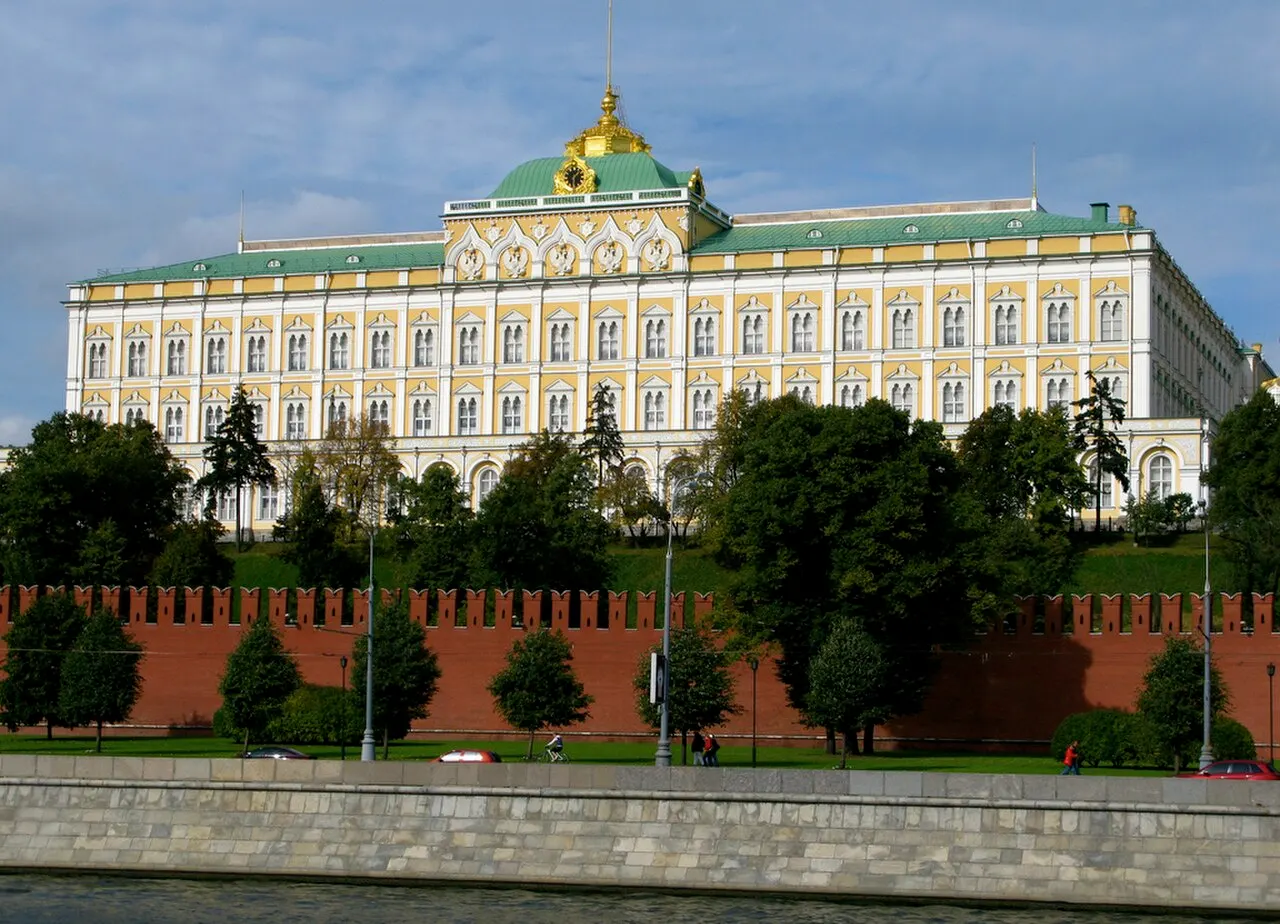
- Russian President Vladimir Putin is set to chair a session of the Collective Security Council of the CSTO in Moscow on Wednesday.
- Armenia's participation in the CSTO has been frozen since February 2024.
- Next: Russian President Vladimir Putin is set to chair a session of the Collective Security Council of the CSTO in Moscow on Wednesday.
Drafted with AI from named sources and checked automatically; published by our AI editor after passing every check. How briefs are made
- Al Jazeera
- DW
The story
Russian President Vladimir Putin is set to chair a session of the Collective Security Council of the CSTO in Moscow on Wednesday. Armenia's participation in the CSTO has been frozen since February 2024.
Armenia has a population of 3 million and has received more than 100,000 people from Nagorno-Karabakh. The situation highlights changing dynamics among former Soviet allies.
Kremlin spokesman Dmitry Peskov said that Armenia de facto does not participate in the CSTO operations, and what happens next will depend on discussions. Armenian Prime Minister Nikol Pashinyan stated that their interest in the CSTO has run its course. The discussions continue as the Wednesday session approaches.
What each side says
Government of Russia
“Armenia de facto doesn’t participate in the CSTO’s operations. What happens next will depend on the nature of the discussions within the organisation.”Dmitry Peskov
Government of Armenia
“our interest in the CSTO has run its course”Nikol Pashinyan
Should Armenia completely sever its participation and relations with the CSTO?
For yes: Yes, because Armenian Prime Minister Nikol Pashinyan stated their interest has run its course.
For no: No, because future relations depend on ongoing organizational discussions, noted Kremlin spokesman Dmitry Peskov.
Who is involved
Nikol Pashinyan
Prime Minister of ArmeniaIn this storyNikol Pashinyan stated that Armenia's interest in the CSTO has run its course.
How we got here
- 2024-02Armenia's participation in the CSTO has been frozen
What the research says
This literature review provides an overview of the existing research and background documentation regarding the foreign relations of Russia, the history of post-Soviet states, and regional integration frameworks. As scholars and students examine contemporary diplomatic meetings and regional developments, understanding the foundational concepts of spheres of influence and economic integration becomes essential. This review is organized into three thematic sections, covering the historical emergence of post-Soviet states, the formal structures of Eurasian integration, and the specific diplomatic context involving regional security frameworks.
Emergence of Post-Soviet States
According to the historical background of post-Soviet states, the dissolution of the Soviet Union in 1991 led to the emergence of 15 independent sovereign states that previously existed as Union Republics, as detailed in the literature on the former Soviet Union3. This group includes Armenia, which has a population of 3 million and has received over 100,000 people from Nagorno-Karabakh, alongside Azerbaijan, Belarus, Estonia, Georgia, Kazakhstan, Kyrgyzstan, Latvia, Lithuania, Moldova, Russia, Tajikistan, Turkmenistan, Ukraine, and Uzbekistan3,4.
Furthermore, Russian foreign policy has continuously guided the interactions of the Russian Federation with these nations, their citizens, and foreign organizations since late 1991, as outlined in the overview of the foreign relations of Russia5.
Eurasian Economic Integration
Scholarly documentation on Eurasian economic integration describes the ongoing process of economic unification among post-Soviet states located in the center of Eurasia, which has been taking shape since 1991 through the Commonwealth of Independent States6. According to a World Trade Organization report cited in the integration literature, this process originally began with the establishment of the Commonwealth of Independent States and is currently implemented primarily through organizations open to any post-Soviet countries, such as the Eurasian Economic Union6.
The literature notes that an economic union represents the deepest stage of economic integration among these independent sovereign nations6.
Spheres of Influence and Security
In the field of international relations, a sphere of influence is defined as a spatial or geographic region, or a set of polities and nations, over which a leader nation state or powerful organization exercises a level of cultural, economic, military, or political influence or exclusivity7. Within this diplomatic landscape, Russian President Vladimir Putin is scheduled to chair a session of the Collective Security Council of the CSTO in Moscow on Wednesday, according to recent reporting4.
Concurrently, official reports note that Armenia's participation in the CSTO has been frozen since February 20244.
The reviewed literature and reports do not yet provide a complete picture of the long-term diplomatic consequences stemming from Armenia's frozen participation in the CSTO. Furthermore, sources do not detail the full scope of discussions expected at the upcoming Collective Security Council session in Moscow chaired by Russian President Vladimir Putin. Additional empirical data is missing regarding the long-term economic and social integration outcomes for the population arriving from Nagorno-Karabakh into Armenia.
What to watch
- Russian President Vladimir Putin is set to chair a session of the Collective Security Council of the CSTO in Moscow on Wednesday.
The data
Real GDP growth, Russia
Russia: 1% in 2025 (-3.9 pts from 2024).
dashed = IMF forecastIMF World Economic OutlookDownload data (CSV, opens in Excel)
Show the numbers (31)
Country: Russia · Indicator: real GDP growth · Source: IMF World Economic Outlook
| Year | Value | Forecast |
|---|---|---|
| 2001 | 5.1 | no |
| 2002 | 4.7 | no |
| 2003 | 7.4 | no |
| 2004 | 7.1 | no |
| 2005 | 6.4 | no |
| 2006 | 8.2 | no |
| 2007 | 8.6 | no |
| 2008 | 5.2 | no |
| 2009 | -7.8 | no |
| 2010 | 4.5 | no |
| 2011 | 4 | no |
| 2012 | 4 | no |
| 2013 | 1.8 | no |
| 2014 | 0.7 | no |
| 2015 | -2 | no |
| 2016 | 0.2 | no |
| 2017 | 1.8 | no |
| 2018 | 2.8 | no |
| 2019 | 2.2 | no |
| 2020 | -2.7 | no |
| 2021 | 5.9 | no |
| 2022 | -1.4 | no |
| 2023 | 4.1 | no |
| 2024 | 4.9 | no |
| 2025 | 1 | no |
| 2026 | 0.9 | yes |
| 2027 | 0.9 | yes |
| 2028 | 1 | yes |
| 2029 | 1 | yes |
| 2030 | 1 | yes |
| 2031 | 1 | yes |
Inflation, Russia
Russia: 8.7% in 2025 (+0.3 pts from 2024).
dashed = IMF forecastIMF World Economic OutlookDownload data (CSV, opens in Excel)
Show the numbers (31)
Country: Russia · Indicator: inflation · Source: IMF World Economic Outlook
| Year | Value | Forecast |
|---|---|---|
| 2001 | 21.5 | no |
| 2002 | 15.8 | no |
| 2003 | 13.7 | no |
| 2004 | 10.9 | no |
| 2005 | 12.7 | no |
| 2006 | 9.7 | no |
| 2007 | 9 | no |
| 2008 | 14.1 | no |
| 2009 | 11.6 | no |
| 2010 | 6.8 | no |
| 2011 | 8.4 | no |
| 2012 | 5.1 | no |
| 2013 | 6.8 | no |
| 2014 | 7.8 | no |
| 2015 | 15.5 | no |
| 2016 | 7 | no |
| 2017 | 3.7 | no |
| 2018 | 2.9 | no |
| 2019 | 4.5 | no |
| 2020 | 3.4 | no |
| 2021 | 6.7 | no |
| 2022 | 13.7 | no |
| 2023 | 5.9 | no |
| 2024 | 8.4 | no |
| 2025 | 8.7 | no |
| 2026 | 6.1 | yes |
| 2027 | 4.8 | yes |
| 2028 | 4 | yes |
| 2029 | 4 | yes |
| 2030 | 4 | yes |
| 2031 | 4 | yes |
IMF World Economic Outlook (IMF data, reused with citation)
Background
At a glance
 Russia
- Capital
- Moscow
- Population
- 144 million
- Leaders
- Vladimir Putin · Mikhail Mishustin
- Currency
- Russian ruble
 Armenia
- Capital
- Yerevan
- Population
- 3.1 million
- Leaders
- Vahagn Khachatryan · Nikol Pashinyan
- Currency
- Armenian dram
 Kazakhstan
- Capital
- Astana
- Population
- 20.4 million
- Leaders
- Kassym-Jomart Tokayev · Olzhas Bektenov
- Currency
- Kazakhstani tenge
Wikidata · IMF, 2026-11-10
Sources and method
References (10)
News reports
Background
- Nikol Pashinyan Wikipedia
- Nikol Pashinyan (Wikidata) Wikidata
- Post-Soviet states Wikipedia
- Foreign relations of Russia Wikipedia
- Eurasian economic integration Wikipedia
- Sphere of influence Wikipedia
Reports used for this brief
- Moscow summit tests Russia’s waning grip on former Soviet allies Al Jazeera
- Russia: Independent Novaya Gazeta shuts its Moscow newsroom DW
Data
- IMF World Economic Outlook IMF data, reused with citation
How this brief was made
Automated research by ZynoNews: trending topic detected across news, searches and Wikipedia; facts and statements from the reports listed; numbers computed from open data; checked automatically for numbers, sources, copying and neutrality. Version 1. 2 news reports from 2 outlets, 9 official datasets, 0 research studies and 6 background sources.
Cite this
For papers, reports and theses. ZynoNews articles keep their address; updates are listed with their date.
ZynoNews Desk. (2026, November 11). Does Moscow summit test Russia influence with former Soviet allies?. ZynoNews. https://zynonews.org/news/does-moscow-summit-test-russia-influence-with-former-soviet-allies-c23694