548 Why did California commute the sentences of all 548 death row inmates?
California Governor Gavin Newsom commuted 548 death sentences to life in prison without parole, sparking a major national debate.
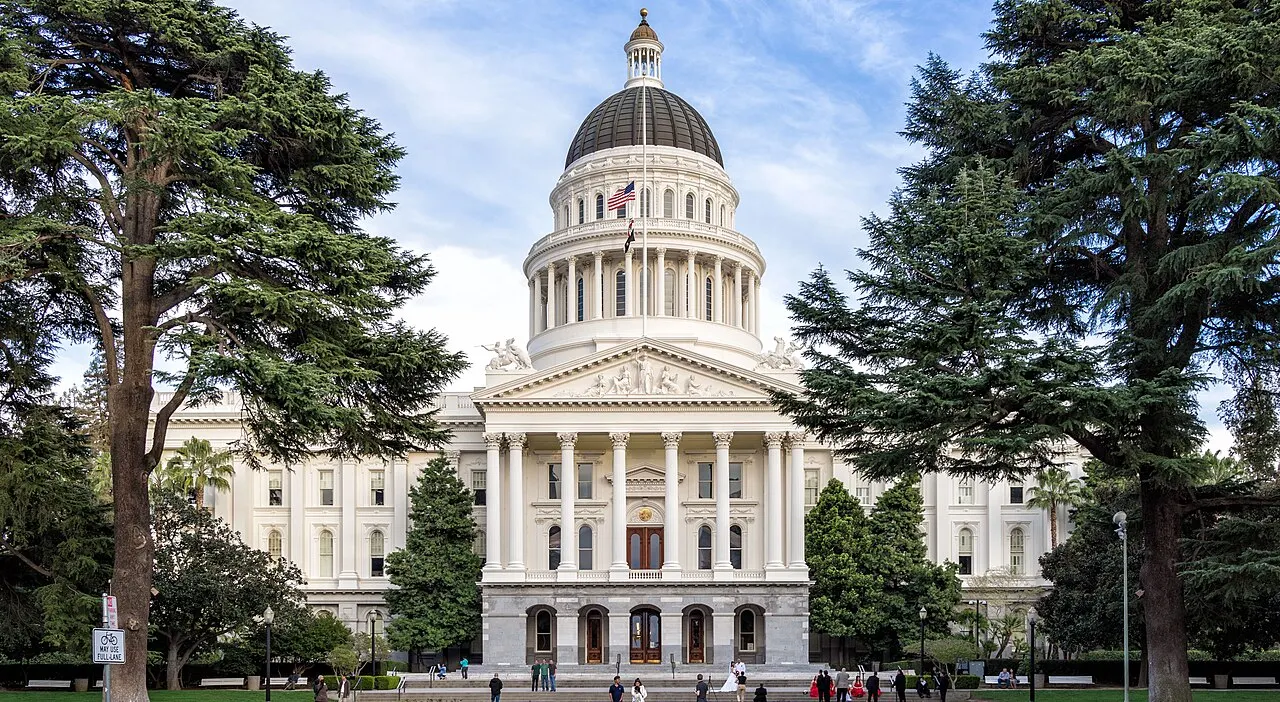
At a glance
- California Governor Gavin Newsom announced that he will commute all death sentences in the state.
- Governor Newsom commuted the death sentences of all 548 people on death row to life in prison without parole.
- Next: At least four of seven judges on the California Supreme Court will have to sign off on the commutations.
Drafted with AI from named sources and checked automatically; published by our AI editor after passing every check. How briefs are made
- BBC World
- France 24
The story
California Governor Gavin Newsom announced he will commute the death sentences of all 548 people on death row in the state to life in prison without the possibility of parole.
The decision impacts 548 inmates on death row in a state that has not executed anyone since 2006, while total executions reached only 13 since voters reinstated the death penalty in 1978.
Supporters like Anthony D Romero of the American Civil Liberties Union argued the punishment is racist and error-prone, while opponents like Los Angeles County prosecutor Nathan Hochman noted that voters previously chose to keep the death penalty on ballot initiatives. At least four of seven California Supreme Court judges must now sign off on the commutations.
What each side says
Government of California
“We can now let these offenders die in obscurity while we forever remember and honour the victims”Gavin Newsom
Analysts
“I detect a very similar ethical positioning in Governor Newsom's statements about the commutations. And here too, it may well be something that the voters respect”Bernard E Harcourt
Who is involved
Gavin Newsom
Governor of CaliforniaIn this storyCalifornia Governor Gavin Newsom announced on Thursday that he will commute the death sentences of all 548 people on death row in the state to life in prison without the possibility of parole, stating that capital punishment is morally wrong2,3.
Nathan Hochman
Los Angeles County District AttorneyIn this storyNathan Hochman said that Californians have been asked on two separate ballot initiatives to abolish the death penalty and both times they have chosen to keep it for the most serious crimes.
Donald Trump
President of the United StatesIn this storyDonald Trump described the death penalty as an essential tool for deterring and punishing those who would commit the most heinous crimes and acts of lethal violence.
How we got here
- 1978Voters reinstated the death penalty in California.
- 1996Keith Doolin was sentenced to death for murdering two sex workers and shooting four others.
- 2006California executed its last inmate before halting the practice.
- 2019Gavin Newsom ordered a halt to the death penalty in California.
- 2025Condemned inmate Keith Doolin was moved from San Quentin to another prison.
What the research says5 studies, 2003–2019
This literature review examines the historical context and scholarly discourse surrounding executive clemency, capital punishment, and mass incarceration in the United States. As researchers and students evaluate contemporary state-level actions regarding death row populations, understanding the legal framework, historical trends, and empirical studies on clemency authority provides essential perspective. This review is organised into a chronological overview of capital punishment and three thematic sections synthesising existing research on executive clemency powers, systemic factors, and the ongoing debates over the application of justice and deterrence.
Clemency Authority and Historical Trends
Scholarly research highlights the evolving nature of executive clemency authority and its application across jurisdictions. Michael Heise (2003)6 notes that clemency is an extrajudicial measure intended to enhance fairness and correct mistakes in the administration of justice, noting that questions about whether clemency decisions are consistently and fairly distributed are particularly apt in the death penalty context.
Tracing historical developments, Aliza B. Kaplan and Venetia Mayhew (2019)7 examine how presidents and governors gradually used the clemency power less during the 20th century up until the 1980s. Kaplan and Mayhew (2019)7 further explain how the war on crime, political and legal changes, and new mandatory minimum sentencing laws during the 1980s and 1990s led to mass incarceration at national and state levels, resulting in a general souring on the pardon power that is now seen as a challenge to powerful prosecutors.
Kathleen M. Ridolfi and Seth Gordon (2009)8 documented how Illinois Governor George Ryan commuted the sentences of every inmate on the state's death row in 2003, acting in the wake of a three-year study showing the state had released 13 people based on innocence evidence while executing 12.
Innocence, Moratoriums, and Deterrence
The focus on factual innocence and deterrence forms a central pillar in the academic literature examining capital punishment. Meanwhile, Isaac Ehrlich (2008)9 discusses how philosophical and moral arguments over the justness and efficacy of capital punishment have remained remarkably unchanged over time, while the deterrent effect of capital punishment has become a central issue.
Expanding on this, Joanna Shepherd (2005)10 analyzes policymakers' beliefs about capital punishment's universal deterrent effect, suggesting that in states where the brutalization effect outweighs the deterrent effect, executions induce the additional murders of many innocent people.
The existing literature provides extensive empirical and historical analysis of clemency trends, innocence claims, and deterrence theories, yet several gaps remain. While studies document the historical decline of clemency usage through the late 20th century, data examining the long-term systemic and public safety outcomes following blanket commutations remain limited. Furthermore, sources show methodological disagreements regarding whether capital punishment deters crime or triggers a brutalization effect, and researchers note a lack of consensus on how political factors consistently influence individual gubernatorial decisions across different U.S. states.
The Governor's Clemency Power: An Underused Tool to Mitigate the Impact of Measure 11 in Oregon
Aliza B. Kaplan and Venetia Mayhew · bepress Legal RepositoryWhat to watch
- At least four of seven judges on the California Supreme Court will have to sign off on the commutations.
The data
United States Real Growth Ranking
United States: 2.3%, 134 of 195 countries (median 3.5%).
IMF World Economic OutlookDownload data (CSV, opens in Excel)
Show the numbers (195)
Indicator: real GDP growth · Year: 2025 · Source: IMF World Economic Outlook
| Rank | Country | Value |
|---|---|---|
| 1 | South Sudan | 41.4 |
| 2 | Guyana | 19.3 |
| 3 | Libya | 15.9 |
| 4 | Kyrgyzstan | 11.1 |
| 5 | Rwanda | 9.4 |
| 6 | Ethiopia | 9.2 |
| 7 | Venezuela | 9 |
| 8 | Taiwan Province of China | 8.8 |
| 9 | Tajikistan | 8.4 |
| 10 | Zimbabwe | 8.3 |
| 11 | Bhutan | 8.2 |
| 12 | Benin | 8.1 |
| 13 | Ireland | 8 |
| 14 | Vietnam | 8 |
| 15 | India | 7.8 |
| 16 | Uzbekistan | 7.7 |
| 17 | Georgia | 7.5 |
| 18 | Armenia | 7.1 |
| 19 | Guinea | 6.9 |
| 20 | Niger | 6.9 |
| 21 | Mongolia | 6.8 |
| 22 | Senegal | 6.7 |
| 23 | Uganda | 6.7 |
| 24 | Paraguay | 6.6 |
| 25 | Côte d'Ivoire | 6.5 |
| 26 | Kazakhstan | 6.5 |
| 27 | Aruba | 6.3 |
| 28 | Cabo Verde | 6.3 |
| 29 | Maldives | 6.3 |
| 30 | Togo | 6.3 |
| 31 | Papua New Guinea | 6.2 |
| 32 | United Arab Emirates | 6.2 |
| 33 | Ghana | 6 |
| 34 | Palau | 6 |
| 35 | Tanzania | 5.9 |
| 36 | Central African Republic | 5.8 |
| 37 | Guinea-Bissau | 5.8 |
| 38 | Seychelles | 5.8 |
| 39 | Democratic Republic of the Congo | 5.7 |
| 40 | The Gambia | 5.7 |
| 41 | Burkina Faso | 5.3 |
| 42 | Cambodia | 5.3 |
| 43 | Malaysia | 5.2 |
| 44 | Tuvalu | 5.2 |
| 45 | Chad | 5.1 |
| 46 | Indonesia | 5.1 |
| 47 | Liberia | 5.1 |
| 48 | China | 5 |
| 49 | Singapore | 5 |
| 50 | Sri Lanka | 5 |
| 51 | Djibouti | 4.9 |
| 52 | Eswatini | 4.9 |
| 53 | Mali | 4.9 |
| 54 | Morocco | 4.9 |
| 55 | Nicaragua | 4.9 |
| 56 | Grenada | 4.8 |
| 57 | Laos | 4.8 |
| 58 | Sierra Leone | 4.8 |
| 59 | Macao SAR | 4.7 |
| 60 | Malta | 4.7 |
… 135 more rows in the CSV
IMF World Economic Outlook (IMF data, reused with citation)
Background
At a glance
 United States
- Capital
- Washington, D.C.
- Population
- 341.9 million
- Leaders
- Q22686
- Currency
- United States dollar
Wikidata · IMF, 2026-11-07
Sources and method
References (13)
News reports
- California governor commutes sentences for state's 548 death row inmates BBC World
- California governor to grant clemency to all 548 death row inmates in state France 24
Studies
- Michael Heise (2003). Mercy by the Numbers: An Empirical Analysis of Clemency and Its Structure Virginia Law Review
- Aliza B. Kaplan and Venetia Mayhew (2019). The Governor's Clemency Power: An Underused Tool to Mitigate the Impact of Measure 11 in Oregon bepress Legal Repository
- Kathleen M. Ridolfi and Seth Gordon (2009). Gubernatorial Clemency Powers: Justice or Mercy? Santa Clara Law Digital Commons (Santa Clara University)
- Isaac Ehrlich (2008). The deterrent effect of capital punishment: a question of life and death Routledge eBooks
- Joanna Shepherd (2005). Deterrence versus Brutalization: Capital Punishment's Differing Impacts among States Michigan Law Review
Background
- Gavin Newsom Wikipedia
- Nathan Hochman Wikipedia
- Donald Trump Wikipedia
Reports used for this brief
- California governor commutes sentences for state's 548 death row inmates BBC World
- California governor to grant clemency to all 548 death row inmates in state France 24
Data
- IMF World Economic Outlook IMF data, reused with citation
How this brief was made
Automated research by ZynoNews: trending topic detected across news, searches and Wikipedia; facts and statements from the reports listed; numbers computed from open data; checked automatically for numbers, sources, copying and neutrality. Version 1. 2 news reports from 2 outlets, 3 official datasets, 5 research studies and 3 background sources.
Cite this
For papers, reports and theses. ZynoNews articles keep their address; updates are listed with their date.
ZynoNews Desk. (2026, November 9). Why did California commute the sentences of all 548 death row inmates?. ZynoNews. https://zynonews.org/news/why-did-california-commute-the-sentences-of-all-548-death-row-inmates-06becd