1,200km What Caused the New Attack on Saudi Arabia's East-West Oil Pipeline?
Saudi Arabia reported a new attack on the critical East-West oil pipeline in the Medina region • The incident caused a limited fire with no reported injuries or operational disruptions • Authorities have not identified the responsible party.
At a glance
- Saudi Arabia's critical East-West oil pipeline suffered another attack in the Medina region on Monday.
- The attack caused a limited fire that was extinguished, with no injuries or fatalities reported.
- Authorities did not identify the party responsible for the recent attack.
Drafted with AI from named sources and checked automatically; published by our AI editor after passing every check. How briefs are made
- Al Jazeera
- TBS News
The story
Saudi Arabia's critical East-West oil pipeline suffered another attack in the Medina region on Monday, causing a limited fire that was later extinguished. Previously, the US State Department ordered some diplomats and their family members to leave Saudi Arabia amid escalating Houthi attacks and strikes that killed three people, including two from intercepted drone debris at an oil field and one at King Fahd International Airport in Dammam.
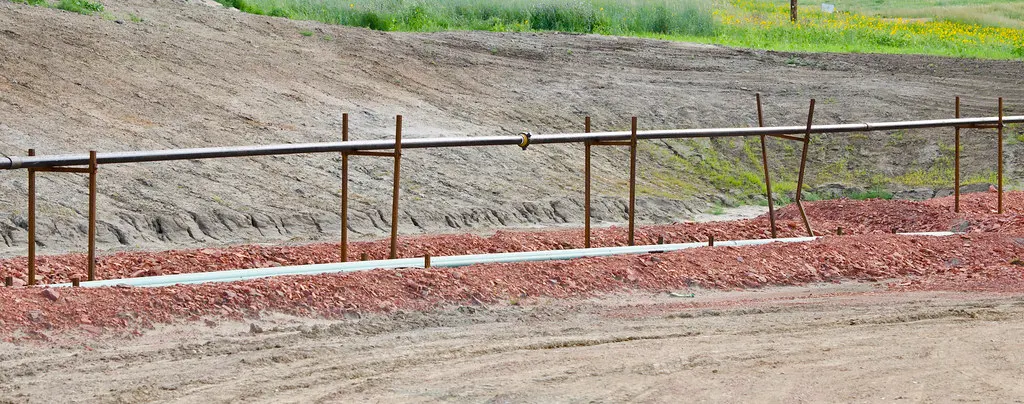
The 1,200km pipeline runs through the desert across the Arabian Peninsula to Yanbu. Riyadh reroutes about 4 million barrels per day of crude via the pipeline, which is equivalent to about 4 percent of global supply. Officials from the Saudi Ministry of Energy stated that no injuries or fatalities were reported, and pipeline operations were unaffected following the attack.
Authorities did not identify the party responsible for the recent attack. The pipeline was previously shut down for several days in September after drone attacks that Saudi Arabia said were launched from Iraq. Observers and markets continue to monitor the security of the route, while authorities have not yet announced further steps regarding the incident.
What each side says
Government of Saudi Arabia
“No injuries or fatalities were reported, and pipeline operations were unaffected”Unnamed Official
Who is involved
Saudi Aramco
National oil company of Saudi ArabiaIn this storyAuthorities reported a new attack on the East-West oil pipeline in the Medina region, causing a limited fire with no reported injuries or operational disruptions2.
What the research says5 studies, 2007–2022
This literature review provides an overview of the existing research and historical context surrounding the security of Saudi Arabia's energy infrastructure and oil supply systems. Understanding the background of Saudi Aramco and the energy sector is essential for analyzing the implications of pipeline incidents beyond today's news. This review is organized into historical development, energy security and geopolitical risks, and infrastructure vulnerabilities, synthesizing findings from official reports and academic studies.
Historical Background and Industry Growth
Saudi Arabia's role in the global energy market is centered on Saudi Aramco, the national oil company headquartered in Dhahran, which holds the world's largest proven crude oil reserves at more than 270 billion barrels and the largest daily oil production (Wikipedia's entry on Saudi Aramco3). The country's economy remains heavily petroleum-based, with oil accounting for 90 percent of exports and nearly 75 percent of government revenue, while producing about 45 percent of the gross domestic product (Wikipedia's entry on Energy in Saudi Arabia4).
Beyond domestic production, historical infrastructure developments in the region include the Baku-Tbilisi-Ceyhan pipeline, a 1,768-kilometer crude oil pipeline connecting the Caspian Sea to the Mediterranean Sea that commenced operations in May 2006 (Wikipedia's entry on the Baku-Tbilisi-Ceyhan pipeline5). Within Saudi Arabia, the critical East-West oil pipeline runs 1,200 kilometers across the Arabian Peninsula to Yanbu, rerouting about 4 million barrels per day of crude, which is equivalent to about 4 percent of global supply (Reports2).
Energy Security and Geopolitical Pressures
Academic literature highlights how shifting global conditions impact the security of Middle East energy supplies. Bassam A. Fattouh (2007)6 noted that while energy security declined in importance during the 1980s and 1990s due to falling prices and high spare capacity, it re-emerged as a priority in the following decade driven by high oil prices, terrorism threats, and instability in oil-exporting countries.
David S. Painter (2012)7 examined the historical role of oil in global dominance, noting that control of oil bolstered U.S. military and economic might throughout the twentieth century. Furthermore, Robin Mills (2020)8 discussed the challenges faced by the Middle East and North Africa region in the global energy transition, citing falling resource rents, regional unrest, and the need to retool domestic hydrocarbon industries while introducing new energy technologies and diversifying economies.
Infrastructure Vulnerabilities and Threats
The operational security of energy infrastructure is a central theme in recent studies and incident reports. Fahad Radhi Alharbi and Dénes Csala (2020)9 evaluated Saudi Arabia's reliance on fossil fuels for electricity and the long-term energy security risks associated with fluctuating costs, emphasizing that Critical Infrastructure Protection requires considering renewable sources. In addition, Benjamin Kenneth Sovacool et al.
(2022)10 explored the geopolitical and security risks facing climate-technology deployment, comparing them to historical threats like nuclear proliferation and terrorism. These security concerns are underscored by physical incidents affecting Saudi infrastructure, such as the October 2026 Houthi ballistic missile and drone attacks on three Saudi airports that killed 23 people (Wikipedia's entry on 2026 Houthi attacks on Saudi airports11).
Similarly, reports indicate that Saudi Arabia's East-West oil pipeline suffered previous disruptions, including a shutdown following drone attacks in September, and a recent attack in the Medina region that caused a limited fire and was extinguished without reported injuries or operational disruptions (Reports2,12).
The available evidence does not yet identify the responsible party behind the recent attack on the East-West oil pipeline in the Medina region, as authorities have not named a perpetrator. Furthermore, while studies document broader energy security concerns, regional unrest, and infrastructure risks, academic literature lacks consensus on the specific long-term tactical measures required to protect cross-peninsular pipelines from localized drone and missile threats. Data regarding the exact economic cost of temporary pipeline shutdowns also remains limited across the current reports.
The next climate war? Statecraft, security, and weaponization in the geopolitics of a low-carbon future
Benjamin Kenneth Sovacool et al. · Energy Strategy ReviewsUpdate to an ongoing story. Follow this story over time: Why did the US order diplomats to leave Saudi Arabia? — living research page →
The data
Saudi Arabia Real GDP Growth
Saudi Arabia: 4.6%, 63 of 195 countries (median 3.5%).
IMF World Economic OutlookDownload data (CSV, opens in Excel)
Show the numbers (195)
Indicator: real GDP growth · Year: 2025 · Source: IMF World Economic Outlook
| Rank | Country | Value |
|---|---|---|
| 1 | South Sudan | 41.4 |
| 2 | Guyana | 19.3 |
| 3 | Libya | 15.9 |
| 4 | Kyrgyzstan | 11.1 |
| 5 | Rwanda | 9.4 |
| 6 | Ethiopia | 9.2 |
| 7 | Venezuela | 9 |
| 8 | Taiwan Province of China | 8.8 |
| 9 | Tajikistan | 8.4 |
| 10 | Zimbabwe | 8.3 |
| 11 | Bhutan | 8.2 |
| 12 | Benin | 8.1 |
| 13 | Ireland | 8 |
| 14 | Vietnam | 8 |
| 15 | India | 7.8 |
| 16 | Uzbekistan | 7.7 |
| 17 | Georgia | 7.5 |
| 18 | Armenia | 7.1 |
| 19 | Guinea | 6.9 |
| 20 | Niger | 6.9 |
| 21 | Mongolia | 6.8 |
| 22 | Senegal | 6.7 |
| 23 | Uganda | 6.7 |
| 24 | Paraguay | 6.6 |
| 25 | Côte d'Ivoire | 6.5 |
| 26 | Kazakhstan | 6.5 |
| 27 | Aruba | 6.3 |
| 28 | Cabo Verde | 6.3 |
| 29 | Maldives | 6.3 |
| 30 | Togo | 6.3 |
| 31 | Papua New Guinea | 6.2 |
| 32 | United Arab Emirates | 6.2 |
| 33 | Ghana | 6 |
| 34 | Palau | 6 |
| 35 | Tanzania | 5.9 |
| 36 | Central African Republic | 5.8 |
| 37 | Guinea-Bissau | 5.8 |
| 38 | Seychelles | 5.8 |
| 39 | Democratic Republic of the Congo | 5.7 |
| 40 | The Gambia | 5.7 |
| 41 | Burkina Faso | 5.3 |
| 42 | Cambodia | 5.3 |
| 43 | Malaysia | 5.2 |
| 44 | Tuvalu | 5.2 |
| 45 | Chad | 5.1 |
| 46 | Indonesia | 5.1 |
| 47 | Liberia | 5.1 |
| 48 | China | 5 |
| 49 | Singapore | 5 |
| 50 | Sri Lanka | 5 |
| 51 | Djibouti | 4.9 |
| 52 | Eswatini | 4.9 |
| 53 | Mali | 4.9 |
| 54 | Morocco | 4.9 |
| 55 | Nicaragua | 4.9 |
| 56 | Grenada | 4.8 |
| 57 | Laos | 4.8 |
| 58 | Sierra Leone | 4.8 |
| 59 | Macao SAR | 4.7 |
| 60 | Malta | 4.7 |
… 135 more rows in the CSV
IMF World Economic Outlook (IMF data, reused with citation)
Background
At a glance
 Saudi Arabia
- Capital
- Riyadh
- Population
- 36 million
- Leaders
- Salman bin Abdulaziz Al Saud
- Currency
- Saudi riyal
Wikidata · IMF, 2026-11-10
Sources and method
References (16)
News reports
- Saudi Arabia reports new attack on key East-West pipeline Al Jazeera
- Saudi East-West oil pipeline hit by new attack in Medina region TBS News
Studies
- Bassam A. Fattouh (2007). How Secure Are Middle East Oil Supplies Oxford University Research Archive (ORA) (University of Oxford)
- David S. Painter (2012). Oil and the American Century Journal of American History
- Robin Mills (2020). A Fine Balance: The Geopolitics of the Global Energy Transition in MENA Lecture notes in energy
- Fahad Radhi Alharbi and Dénes Csala (2020). Saudi Arabia’s Solar and Wind Energy Penetration: Future Performance and Requirements Energies
- Benjamin Kenneth Sovacool et al. (2022). The next climate war? Statecraft, security, and weaponization in the geopolitics of a low-carbon future Energy Strategy Reviews
Background
- Saudi Aramco (Wikidata) Wikidata
- Saudi Aramco Wikipedia
- Energy in Saudi Arabia Wikipedia
- Baku–Tbilisi–Ceyhan pipeline Wikipedia
- 2026 Houthi attacks on Saudi airports Wikipedia
Reports used for this brief
- Saudi Arabia reports new attack on key East-West pipeline Al Jazeera
- Saudi East-West oil pipeline hit by new attack in Medina region TBS News
Data
- IMF World Economic Outlook IMF data, reused with citation
- World Bank, World Development Indicators CC BY 4.0
How this brief was made
Automated research by ZynoNews: trending topic detected across news, searches and Wikipedia; facts and statements from the reports listed; numbers computed from open data; checked automatically for numbers, sources, copying and neutrality. Version 1. 2 news reports from 2 outlets, 4 official datasets, 5 research studies and 5 background sources.
Cite this
For papers, reports and theses. ZynoNews articles keep their address; updates are listed with their date.
ZynoNews Desk. (2026, November 11). What Caused the New Attack on Saudi Arabia's East-West Oil Pipeline?. ZynoNews. https://zynonews.org/news/what-caused-the-new-attack-on-saudi-arabia-s-east-west-oil-pipeline-a92c2d