4,800 How is DR Congo responding to attacks on health workers during the Ebola outbreak?
Over 4,800 people have died in DR Congo as health workers face attacks while responding to Ebola alerts.
At a glance
- A nurse was killed and another health worker injured by local youths in north-eastern DR Congo during an Ebola alert.
- Local youths accused health workers of contaminating water sources and spreading the Ebola virus.
- Uganda banned all non-essential travel to and from DR Congo and mandated a 21-day quarantine for returning citizens.
- Next: Continued monitoring of contacts in quarantine
Drafted with AI from named sources and checked automatically; published by our AI editor after passing every check. How briefs are made
- BBC World
- BBC Africa
The story
A nurse was killed and another health worker was seriously injured in an attack by local youths in north-eastern DR Congo while responding to an Ebola alert. Local youths accused the health workers of contaminating water sources and spreading the Ebola virus.
Over 4,800 people have died and nearly 10,000 have been infected in DR Congo since the outbreak began in May. In August, the Red Cross reported its volunteers were injured and an ambulance was set on fire in 11 violent incidents during the first 100 days of the outbreak.
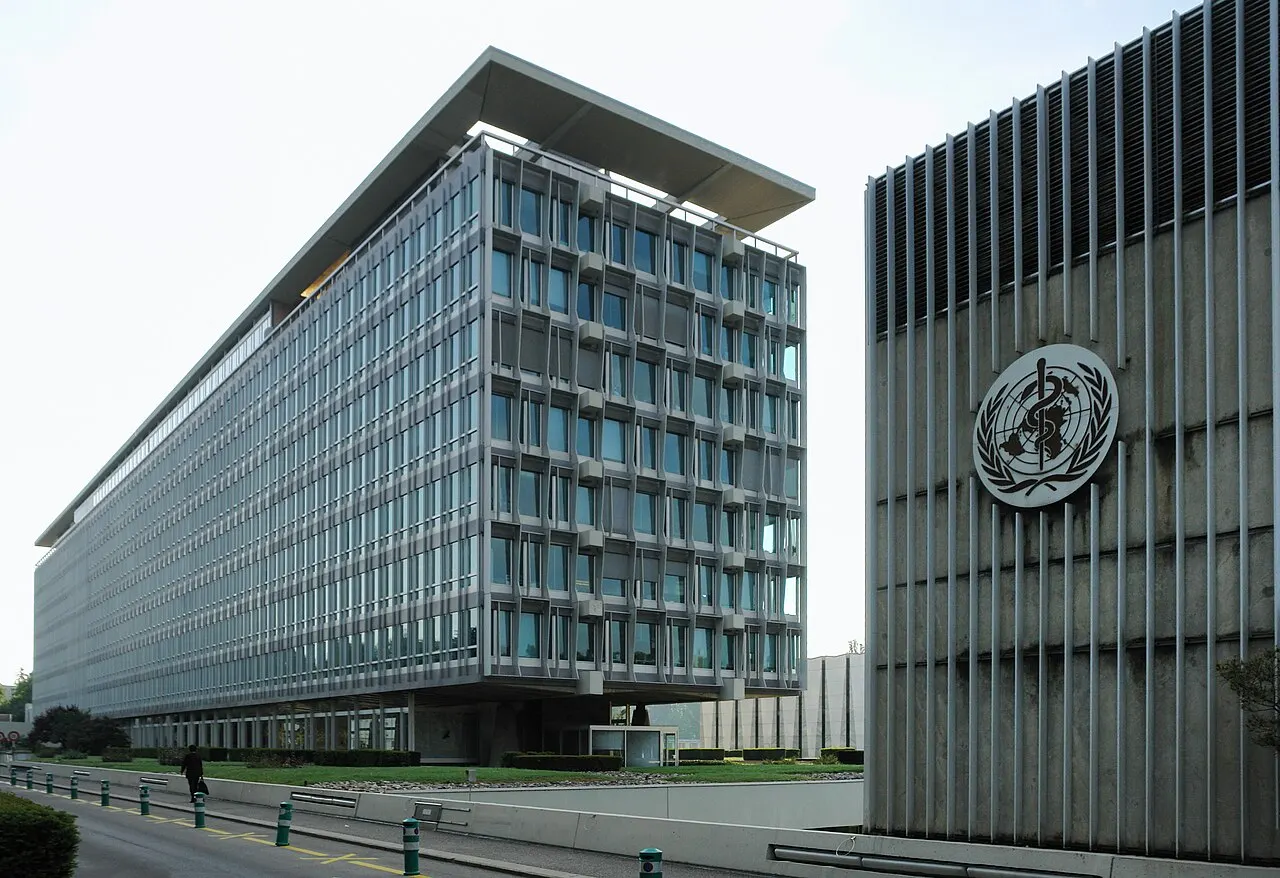
WHO Director-General Tedros Adhanom Ghebreyesus said health workers must be able to carry out their duties in safety and dignity, adding that healthcare personnel should always be protected. Uganda's Health Minister Chris Baryomunsi stated that measures are implemented to ensure Uganda remains free of Ebola.
What each side says
United Nations
Tedros Adhanom Ghebreyesus stated that health workers must be able to carry out their duties in safety and dignity.
Government of Uganda
“All these are measures to ensure that we keep Uganda free of Ebola”Chris Baryomunsi
What the research says
This literature review examines the historical context and documented reports surrounding Ebola outbreaks and security challenges in the Democratic Republic of the Congo. Understanding the background of the disease and prior incidents provides essential context for analyzing ongoing responses to health worker safety. This review is organised into a historical overview of previous outbreaks, documented incidents of violence against medical personnel, and the broader regional spread and containment measures implemented by neighboring countries.
Historical Background of Ebola
According to Wikipedia's overview of Ebola virus disease1, the zoonotic viral hemorrhagic fever is caused by four of the six known ebolaviruses, with symptoms typically appearing between two days and three weeks after infection. Historical records show that an outbreak occurred in Zaire between August and November 1976, originating in the village of Yambuku2.
Subsequently, Wikipedia's history of the Democratic Republic of the Congo outlines that a separate outbreak took place in the country in August 2014 and was declared over in November of that year after 42 days without new cases, marking the seventh outbreak in the region3. Furthermore, background documentation notes that the Democratic Republic of the Congo is the second-largest country in Africa by land area, with a population of approximately 124 million people4.
Attacks on Health Workers
Published reports document multiple violent incidents directed at medical personnel and facilities during response efforts. According to field reports, local youths accused health workers of contaminating water sources and spreading the Ebola virus5, leading to an attack in north-eastern DR Congo where a nurse was killed and another health worker was seriously injured while responding to an alert5.
Additional reports state that a politician in DR Congo was beaten to death after promoting measures to stop the spread of the virus5. Similarly, the Red Cross reported in August that volunteers were injured and an ambulance was set on fire across 11 violent incidents during the first 100 days of the outbreak5, during which total infections neared 10,000 and deaths surpassed 4,800 since the outbreak began in May5.
Regional Spread and Containment
Reports detail cross-border transmission and official responses in neighboring countries. Kenya and Nigeria reported their first cases linked to the current outbreak earlier in the month, with a Kenyan businessman dying two days after arriving in Nairobi and a second related woman dying over the weekend5. In response to the situation in DR Congo, Uganda banned all non-essential travel to and from the country and mandated a 21-day quarantine for returning citizens5, having previously recorded 20 cases and two deaths before being declared free of the disease by the WHO in August5.
Meanwhile, monitoring protocols led to the discharge of about 60 people who came into contact with the Kenyan patient in Uganda5, while the first group of 20 contacts in Kenya completed 21 days in quarantine and returned home5, and the Ebola patient in Nigeria was flown from Abuja to Switzerland for further treatment5.
The current literature and reports do not yet provide a comprehensive analysis of the underlying socioeconomic factors driving community mistrust and attacks against health workers in specific regions of the Democratic Republic of the Congo. While individual violent incidents and mortality statistics are documented, there is a lack of detailed comparative data on how different local communities perceive public health interventions. Additionally, sources do not fully explore the long-term efficacy of cross-border quarantine measures implemented by neighboring states such as Uganda, leaving questions about their broader impact on regional mobility and containment open for further study.
What to watch
- Continued monitoring of contacts in quarantine
- Implementation of travel bans and quarantine measures
The data
Health spending comparison
Democratic Republic of the Congo: 3.68%, 163 of 193 countries (median 6.37%).
World Bank, World Development IndicatorsDownload data (CSV, opens in Excel)
Show the numbers (193)
Indicator: health spending (% of GDP) · Year: 2023 · Source: World Bank, World Development Indicators
| Rank | Country | Value |
|---|---|---|
| 1 | Tuvalu | 27.08968544 |
| 2 | Naoero | 18.21076012 |
| 3 | United States | 16.69414902 |
| 4 | Afghanistan | 14.9857626 |
| 5 | Marshall Islands | 13.40528965 |
| 6 | Liberia | 13.00574875 |
| 7 | Micronesia, Fed. Sts. | 12.88087559 |
| 8 | Lesotho | 12.61182117 |
| 9 | Germany | 12.26655293 |
| 10 | Austria | 11.8325634 |
| 11 | Switzerland | 11.69096088 |
| 12 | South Sudan | 11.61002254 |
| 13 | France | 11.53530598 |
| 14 | Canada | 11.3095665 |
| 15 | Sweden | 11.21510124 |
| 16 | United Kingdom | 11.133358 |
| 17 | Kiribati | 10.94525623 |
| 18 | Palau | 10.85468197 |
| 19 | Belgium | 10.80371571 |
| 20 | Japan | 10.73979473 |
| 21 | West Bank and Gaza | 10.73343945 |
| 22 | Central African Republic | 10.65553188 |
| 23 | Chile | 10.53092575 |
| 24 | Finland | 10.47389507 |
| 25 | Australia | 10.39852047 |
| 26 | Argentina | 10.2695179 |
| 27 | Portugal | 10.24061108 |
| 28 | New Zealand | 10.06186676 |
| 29 | Netherlands | 10.00551128 |
| 30 | Slovenia | 9.87630939 |
| 31 | Brazil | 9.73092747 |
| 32 | Yemen, Rep. | 9.69559193 |
| 33 | Montenegro | 9.6549921 |
| 34 | Timor-Leste | 9.59779453 |
| 35 | Namibia | 9.48251629 |
| 36 | Norway | 9.42925453 |
| 37 | Denmark | 9.38812923 |
| 38 | Cuba | 9.38383102 |
| 39 | Armenia | 9.32119179 |
| 40 | El Salvador | 9.28738594 |
| 41 | Maldives | 9.24973583 |
| 42 | Spain | 9.2206583 |
| 43 | Burundi | 9.09471226 |
| 44 | Uruguay | 9.01887608 |
| 45 | Iceland | 8.98358727 |
| 46 | Bosnia and Herzegovina | 8.9216938 |
| 47 | South Africa | 8.90966797 |
| 48 | Malta | 8.84301376 |
| 49 | Guinea-Bissau | 8.82204819 |
| 50 | Korea, Rep. | 8.67656994 |
| 51 | Czechia | 8.50710297 |
| 52 | Mozambique | 8.50126553 |
| 53 | Italy | 8.44437313 |
| 54 | Greece | 8.39367008 |
| 55 | Paraguay | 8.35731316 |
| 56 | Panama | 8.33022976 |
| 57 | Nicaragua | 8.29879284 |
| 58 | Ukraine | 8.2027483 |
| 59 | Colombia | 8.14139366 |
| 60 | Cyprus | 8.11912918 |
… 133 more rows in the CSV
World Bank, World Development Indicators (CC BY 4.0)
Background
At a glance
 Democratic Republic of the Congo
- Capital
- Kinshasa
- Population
- 106.6 million
- Leaders
- Félix Tshisekedi · Ilunga Ilunkamba Sylvestre
- Currency
- Congolese franc
 United Kingdom
- Capital
- London
- Population
- 69.5 million
- Leaders
- Charles III · Andy Burnham
- Currency
- pound sterling
Wikidata · IMF, 2026-10-26
Sources and method
References (9)
News reports
Background
- Ebola Wikipedia
- 1976 Zaire Ebola virus outbreak Wikipedia
- 2014 Democratic Republic of the Congo Ebola outbreak Wikipedia
- Democratic Republic of the Congo Wikipedia
Reports used for this brief
- Nurse killed in attack while responding to Ebola alert in DR Congo BBC World
- Nurse killed in attack while responding to Ebola alert in DR Congo BBC Africa
Data
- IMF World Economic Outlook IMF data, reused with citation
- World Bank, World Development Indicators CC BY 4.0
How this brief was made
Automated research by ZynoNews: trending topic detected across news, searches and Wikipedia; facts and statements from the reports listed; numbers computed from open data; checked automatically for numbers, sources, copying and neutrality. Version 1. 2 news reports from 2 outlets, 8 official datasets, 0 research studies and 4 background sources.
Cite this
For papers, reports and theses. ZynoNews articles keep their address; updates are listed with their date.
ZynoNews Desk. (2026, October 27). How is DR Congo responding to attacks on health workers during the Ebola outbreak?. ZynoNews. https://zynonews.org/news/how-is-dr-congo-responding-to-attacks-on-health-workers-during-the-ebola-outbrea-e48fe7