54 seats 54 Seats For Netanyahu, 49 For Opposition As Election Remains Undecided
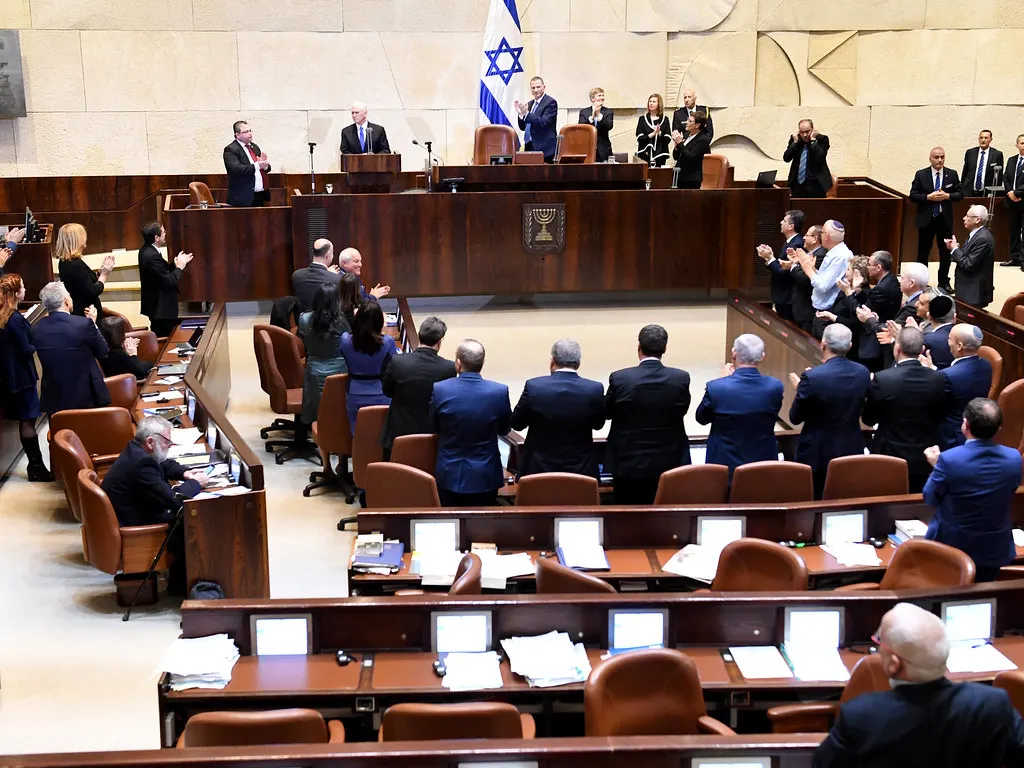
Vote counting continues in Israel as exit polls and partial tallies show neither Benjamin Netanyahu nor Gadi Eisenkot securing a majority.
At a glance
- With more than 60 percent of ballots tallied, Benjamin Netanyahu's camp was narrowly ahead of the opposition but short of a clear majority.
- As of 11 GMT with over 84 percent of votes counted, Netanyahu's coalition was on course for 54 seats and Eisenkot's opposition bloc for 49 seats, while 61 seats were needed for a majority.
- Israel's stock market fell sharply amid exit polls showing no clear winner, with the Tel Aviv 125 index dropping up to 3.5 percent in early trading.
- Palestinian parties gained 19 seats in the election, positioning them as potential kingmakers.
- Israel's Central Elections Committee stated it received a complaint from the Likud party alleging Arab parties compromised election integrity and would examine the claims.
- Next: Yair Golan meeting with three leaders for coalition talks tomorrow
Drafted with AI from named sources and checked automatically; published by our AI editor after passing every check. How briefs are made
- BBC World
- BBC Middle East
- France 24
- Al Jazeera
- The Guardian World
The story
As of 11 GMT with over 84 percent of votes counted, Prime Minister Benjamin Netanyahu's coalition was on course for 54 seats and Gadi Eisenkot's opposition bloc for 49 seats, short of the 61 seats needed for a majority.
The political deadlock affected markets as Israel's stock market fell sharply, with the Tel Aviv 125 index dropping up to 3.5 percent in early trading. Meanwhile, gross domestic product grew 2.9 percent in 2025 and 3.2 percent in the first half of 2026.
Yair Golan, leader of the centre-left Democrats, said he will meet with three leaders tomorrow for coalition talks. Netanyahu's Likud party accused Arab parties without evidence of stealing the election, while Israel's Central Elections Committee stated it received a complaint alleging compromised election integrity and would examine the claims.
What each side says
Opposition in Israel
Yair Golan stated that he will meet with three leaders tomorrow for coalition talks.
Government of Israel
Netanyahu's Likud party accused Arab parties of stealing the election and demanded investigations.
Who is involved
Yair Golan
Israeli politician and leader of The DemocratsIn this storyYair Golan stated that he will meet with three leaders tomorrow for coalition talks according to the statements.
Volker Türk
United Nations High Commissioner for Human RightsIn this storyVolker Türk called on authorities to change course massively according to the statements.
What the research says6 studies, 2010–2020
This literature review provides an overview of the political history, coalition dynamics, and institutional frameworks underpinning elections in Israel, serving as context for the ongoing vote count showing no clear winner. By examining legislative precedents, multi-party systems, and behavioral studies on political trust and polarization, this survey maps the established research landscape. The review is organized chronologically through historical electoral developments and thematically across studies analyzing coalition formation, political polarization, and institutional trust.
Historical Electoral Precedents
Legislative elections in Israel have frequently experienced political deadlock, leading to multiple snap elections over short periods (Wikipedia's history of the 2021 Israeli legislative election4). According to Wikipedia's history of the 2020 Israeli legislative election5, elections held on 2 March 2020 initially resulted in a stalemate that was resolved through a coalition agreement featuring a rotating premiership between Benjamin Netanyahu and Benny Gantz.
Further legislative elections were held on 23 March 2021 to elect members of the 24th Knesset, occurring amidst continued political deadlock following three previous elections in April 2019, September 2019, and 2020 (Wikipedia's history of the 2021 Israeli legislative election4). A rotation government was subsequently announced by Yair Lapid and Naftali Bennett on 2 June 2021 and approved on 13 June 2021 (Wikipedia's history of the 2021 Israeli legislative election4).
Subsequent legislative elections on 1 November 2022 resulted in the right-wing national camp led by former prime minister Benjamin Netanyahu winning a parliamentary majority, alongside losses for left-wing and Arab parties and gains by the far-right (Wikipedia's history of the 2022 Israeli legislative election6).
Electoral Systems and Coalition Politics
25 percent, where party seats in the Knesset are proportional to their votes (Wikipedia's history of Elections in Israel7). Israel features a multi-party system based on coalition governments because no single party has ever won a majority of seats in a national election, with the sole exception of the Alignment briefly holding a majority following an alliance formed prior to the 1969 elections (Wikipedia's history of Elections in Israel7).
Analyzing coalition behavior cross-nationally, Birnir and Şatana (2012)8 noted that coalition-building parties typically prefer small policy distances between partners, though plurality parties often prioritize demonstrating inclusiveness over policy distance concerns when engaging with minorities. In the context of executive-legislative design, Ganghof (2017)9 examined semi-parliamentary government models that balance majoritarian and proportional visions of democracy without concentrating executive power in a single individual.
Political Trust and Polarization
Political polarization and institutional trust have been central subjects in empirical studies of parliamentary democracies. Lindqvist and Östling (2010)10 found that political polarization, measured through the dispersion of self-reported political preferences, is strongly associated with smaller government in democratic countries, though no such relationship exists in undemocratic nations. Regarding public trust, Shomer et al.
(2017)11 observed a steady decline in citizen political trust and growing skepticism toward key representative institutions, noting that political parties often implement intra-party democratization to combat voter distrust, drawing on empirical analyses from Belgium and Israel. Additionally, Beasley and Kaarbo (2014)12 investigated how multiparty cabinets in parliamentary democracies produce more extreme foreign policies than single-party cabinets, finding that a higher number of parties and weak parliaments promote extremity within coalitions.
Crisis Governance and Policy Responses
Research has also examined executive management during overlapping political and public health crises in Israel. Maor et al. (2020)13 described the efforts undertaken by the Israeli government to contain the spread of COVID-19 amidst a constitutional crisis and a yearlong electoral impasse. Their study focused on the leadership of Prime Minister Benjamin Netanyahu while he was awaiting trial for charges of fraud, bribery, and breach of trust (Maor et al.
, 2020)13. Utilizing a disproportionate policy perspective, Maor et al. (2020)13 analyzed the ideas and sensitivities that shaped policy responses, prioritizing differential measures over nationwide solutions despite public domain data supporting alternative epidemiological or social approaches.
The existing literature provides extensive documentation of historical electoral deadlocks, coalition formation frameworks, and institutional trust in Israel up to the 2022 elections, but it does not yet show comprehensive quantitative assessments of how recent economic indicators—such as the reported 2.9 percent GDP growth in 2025 and 3.2 percent in the first half of 2026—directly influence contemporary voting behavior or coalition bargaining strategies. Furthermore, while studies analyze minority political access and intra-party democratization, sources differ on the precise mechanisms by which emerging kingmakers, such as Palestinian parties gaining 19 seats, impact post-election coalition stability. Finally, empirical data linking real-time market reactions, like the reported drop in the Tel Aviv 125 index, to parliamentary deadlock remain unexamined in current academic literature.
When COVID-19, constitutional crisis, and political deadlock meet: the Israeli case from a disproportionate policy perspective
Moshe H Maor et al. · Policy and SocietyWhat to watch
- Yair Golan meeting with three leaders for coalition talks tomorrow
- Israel's Central Elections Committee examining complaints from the Likud party regarding election integrity
- The ongoing vote count as ballots continue to be tallied
Update to an ongoing story. Follow this story over time: How Will Israel's First Post-Attack Parliamentary Elections Shape the Future Government? — living research page →
The data
Real GDP Growth
Israel: 3.5% in 2025 (+1.8 pts from 2024).
dashed = IMF forecastIMF World Economic OutlookDownload data (CSV, opens in Excel)
Show the numbers (31)
Country: Israel · Indicator: real GDP growth · Source: IMF World Economic Outlook
| Year | Value | Forecast |
|---|---|---|
| 2001 | 0.3 | no |
| 2002 | -0.3 | no |
| 2003 | 1.6 | no |
| 2004 | 4.6 | no |
| 2005 | 4.3 | no |
| 2006 | 5.6 | no |
| 2007 | 6.3 | no |
| 2008 | 3.2 | no |
| 2009 | 1.2 | no |
| 2010 | 5.5 | no |
| 2011 | 5.6 | no |
| 2012 | 2.4 | no |
| 2013 | 4.1 | no |
| 2014 | 3.7 | no |
| 2015 | 2.2 | no |
| 2016 | 4.5 | no |
| 2017 | 4.3 | no |
| 2018 | 4.1 | no |
| 2019 | 3.6 | no |
| 2020 | -1.9 | no |
| 2021 | 9 | no |
| 2022 | 6.1 | no |
| 2023 | 2 | no |
| 2024 | 1.7 | no |
| 2025 | 3.5 | no |
| 2026 | 4.5 | yes |
| 2027 | 4.4 | yes |
| 2028 | 3.6 | yes |
| 2029 | 3.6 | yes |
| 2030 | 3.6 | yes |
| 2031 | 3.5 | yes |
Inflation Ranking
Israel: 3%, 96 of 195 countries (median 3%).
IMF World Economic OutlookDownload data (CSV, opens in Excel)
Show the numbers (195)
Indicator: inflation · Year: 2025 · Source: IMF World Economic Outlook
| Rank | Country | Value |
|---|---|---|
| 1 | Venezuela | 252 |
| 2 | Sudan | 99.9 |
| 3 | South Sudan | 97.6 |
| 4 | Zimbabwe | 81.4 |
| 5 | Iran | 50.6 |
| 6 | Argentina | 41.9 |
| 7 | Türkiye | 34.9 |
| 8 | Burundi | 34 |
| 9 | Malawi | 28.4 |
| 10 | Haiti | 28.3 |
| 11 | Nigeria | 23 |
| 12 | Myanmar | 21.1 |
| 13 | Egypt | 20.4 |
| 14 | Angola | 20.2 |
| 15 | Yemen | 20.2 |
| 16 | Bolivia | 19.5 |
| 17 | Ethiopia | 16 |
| 18 | Lebanon | 14.6 |
| 19 | Ghana | 14.2 |
| 20 | Zambia | 13.9 |
| 21 | Ukraine | 12.7 |
| 22 | Kazakhstan | 11.4 |
| 23 | West Bank and Gaza | 10.5 |
| 24 | Bangladesh | 10 |
| 25 | Suriname | 9.2 |
| 26 | Uzbekistan | 8.8 |
| 27 | Russia | 8.7 |
| 28 | Mongolia | 8.6 |
| 29 | Liberia | 8.3 |
| 30 | Kyrgyzstan | 8.2 |
| 31 | Madagascar | 8 |
| 32 | The Gambia | 7.9 |
| 33 | Moldova | 7.8 |
| 34 | Laos | 7.7 |
| 35 | Sierra Leone | 7.6 |
| 36 | Democratic Republic of the Congo | 7.4 |
| 37 | Romania | 7.3 |
| 38 | Rwanda | 7 |
| 39 | Belarus | 6.6 |
| 40 | Naoero | 6.1 |
| 41 | Kiribati | 5.9 |
| 42 | Azerbaijan | 5.6 |
| 43 | Tunisia | 5.3 |
| 44 | Colombia | 5.1 |
| 45 | Brazil | 5 |
| 46 | Estonia | 4.8 |
| 47 | Uruguay | 4.7 |
| 48 | Honduras | 4.6 |
| 49 | Pakistan | 4.5 |
| 50 | Croatia | 4.4 |
| 51 | Hungary | 4.4 |
| 52 | Mozambique | 4.4 |
| 53 | Papua New Guinea | 4.4 |
| 54 | Chile | 4.2 |
| 55 | Slovakia | 4.2 |
| 56 | Iceland | 4.1 |
| 57 | Kenya | 4.1 |
| 58 | Marshall Islands | 4.1 |
| 59 | Nepal | 4.1 |
| 60 | North Macedonia | 4.1 |
… 135 more rows in the CSV
IMF World Economic Outlook (IMF data, reused with citation)
Background
At a glance
 Israel
- Capital
- Jerusalem
- Population
- 10.1 million
- Leaders
- Isaac Herzog · Benjamin Netanyahu
- Currency
- new shekel
Wikidata · IMF, 2026-10-29
Sources and method
References (19)
Studies
- Jóhanna Kristín Birnir and Nil Seda Şatana (2012). Religion and Coalition Politics Comparative Political Studies
- Steffen Ganghof (2017). A new political system model: Semi‐parliamentary government European Journal of Political Research
- Erik Lindqvist and Robert Östling (2010). Political Polarization and the Size of Government American Political Science Review
- Yael Shomer et al. (2017). Does intra-party democracy affect levels of trust in parties? The cases of Belgium and Israel Acta Politica
- Ryan K. Beasley and Juliet Kaarbo (2014). Explaining Extremity in the Foreign Policies of Parliamentary Democracies International Studies Quarterly
- Moshe H Maor et al. (2020). When COVID-19, constitutional crisis, and political deadlock meet: the Israeli case from a disproportionate policy perspective Policy and Society
Background
- Yair Golan Wikipedia
- Yair Golan (Wikidata) Wikidata
- Volker Türk Wikipedia
- 2021 Israeli legislative election Wikipedia
- 2020 Israeli legislative election Wikipedia
- 2022 Israeli legislative election Wikipedia
- Elections in Israel Wikipedia
Reports used for this brief
- Watch: What happens now after close vote in Israeli election? BBC World
- Watch: What happens now after close vote in Israeli election? BBC Middle East
- Israel election: There's no clear winner France 24
- Israel’s stock market drops as exit polls show no clear election winner Al Jazeera
- Israel election results live: vote count continues as exit polls suggest no clear winner The Guardian World
Data
- IMF World Economic Outlook IMF data, reused with citation
How this brief was made
Automated research by ZynoNews: trending topic detected across news, searches and Wikipedia; facts and statements from the reports listed; numbers computed from open data; checked automatically for numbers, sources, copying and neutrality. Version 1. 5 news reports from 5 outlets, 4 official datasets, 6 research studies and 7 background sources.
Cite this
For papers, reports and theses. ZynoNews articles keep their address; updates are listed with their date.
ZynoNews Desk. (2026, October 29). 54 Seats For Netanyahu, 49 For Opposition As Election Remains Undecided. ZynoNews. https://zynonews.org/news/54-seats-for-netanyahu-49-for-opposition-as-election-remains-undecided-f3e3b1